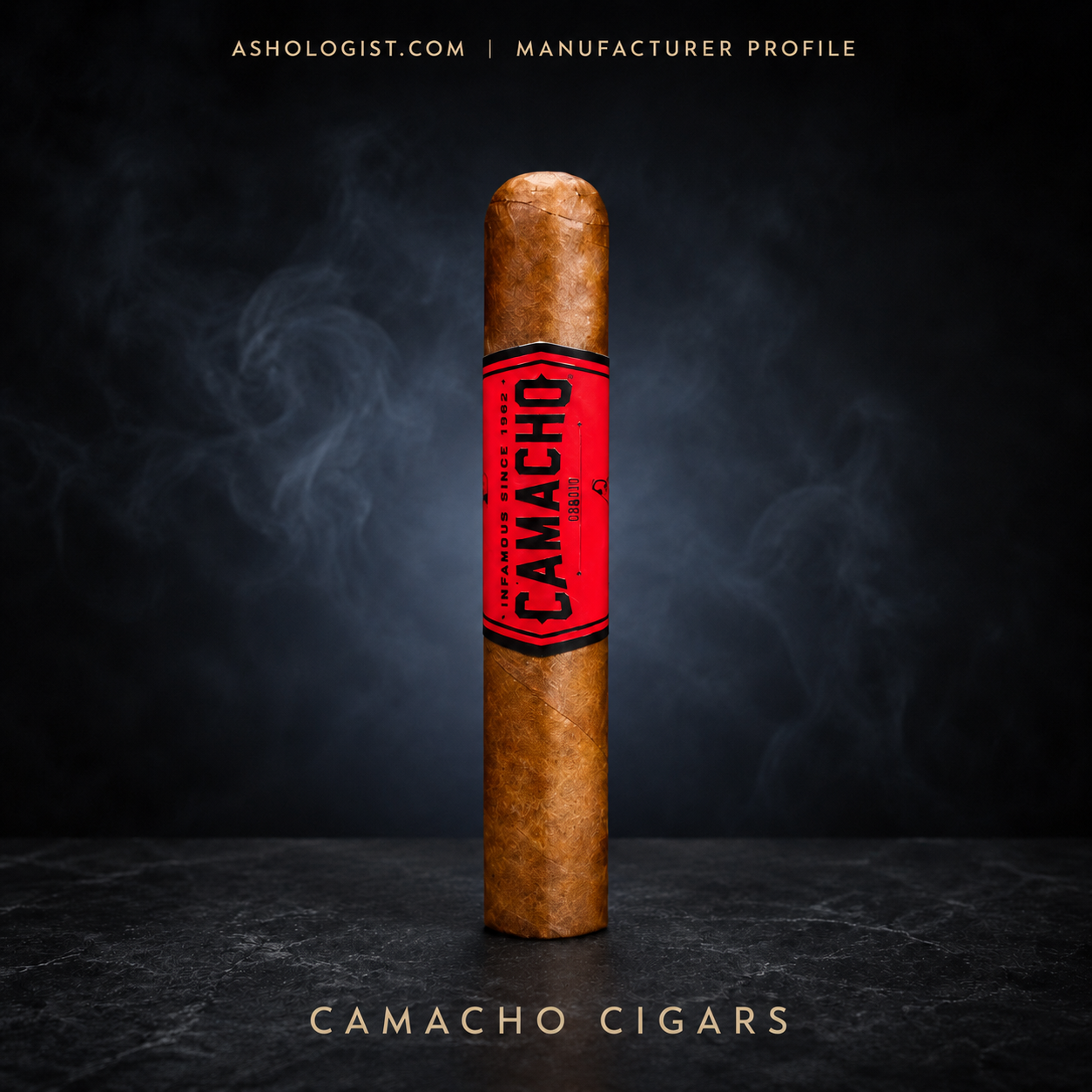
Manufacturer Profile
Camacho Cigars
From Simón Camacho and the Eiroa Family to Oettinger Davidoff's Honduran Brand
Last verified August 20, 2026
Camacho Cigars at a Glance
- Founded
- 1961
- Original founder
- Simón Camacho
- Modern Honduran builders
- Julio and Christian Eiroa
- Parent ownership
- Oettinger Davidoff Group since 2008
- Manufacturing site
- Agroindustrias Diadema, Danlí, Honduras
- Primary production base
- Honduras
- Historical identity
- Jamastrán Valley and Corojo-seed tobacco
Camacho is a Honduran-centered premium-cigar brand owned by the family-controlled Oettinger Davidoff Group. The brand traces its origin to Simón Camacho in 1961, developed its modern Corojo identity under Julio and Christian Eiroa, and joined Oettinger Davidoff through a 2008 acquisition.
Camacho cigars are made in Danlí, Honduras, at Oettinger Davidoff's Honduran manufacturing operation. The portfolio is known for bold positioning, Honduran Corojo heritage and color-coded core families including Corojo, Ecuador, Connecticut, Triple Maduro and Nicaragua.
Simón Camacho and the Brand Origin
Camacho's official company history is commonly dated to 1961 and founder Simón Camacho. The earliest brand story predates the Eiroa family's ownership and the large Honduran tobacco and factory system now associated with the name.
Publishing should preserve that distinction: Simón Camacho founded the brand, while the Eiroa family built the Honduran production identity that made Camacho especially important to modern premium-cigar smokers.
The Eiroa Family and Honduran Corojo
The Eiroa family acquired Camacho in the 1990s. Julio Eiroa's Honduran tobacco operations and Christian Eiroa's brand leadership helped center Camacho on the Jamastrán Valley and authentic Corojo-seed tobacco.
Camacho Corojo, released in the late 1990s, made the word Corojo unusually visible in the U.S. premium-cigar market. The family's agricultural work and strong full-flavored blends became the core of the brand's reputation.
The 2008 Oettinger Davidoff Acquisition
Oettinger Davidoff acquired Camacho from the Eiroa family in October 2008. The deal included the cigar company and operations in Danlí and Miami, while contemporary reporting said the Eiroa family retained ownership of its tobacco fields.
Christian Eiroa initially remained with Camacho after the acquisition and later left to create CLE Cigar Company. Camacho thereafter became a permanent brand within Oettinger Davidoff's international premium-cigar portfolio.
A Bold Repositioning Under Davidoff
Oettinger Davidoff overhauled Camacho's branding in 2013 with bright color coding and a more overtly bold identity. Some blends and packaging changed, while selected heritage concepts later returned in limited or revised form.
The modern brand balances historical Corojo credibility with multinational blends and clear shelf navigation. Historical product claims should therefore be dated to the Eiroa era, the 2013 relaunch or a later release as appropriate.
Honduran Manufacturing and Crop-to-Shop
Oettinger Davidoff identifies its Danlí, Honduras, site as the manufacturing home for Camacho and Zino. The group describes a crop-to-shop model that oversees seed development, tobacco processing, cigar production and distribution.
Camacho is more vertically integrated than many brand-only companies, but not every cigar is a Honduran puro. Modern blends may combine Honduran tobacco with leaves from Ecuador, the Dominican Republic, Nicaragua, Brazil or other origins.
Ownership, Distribution and Manufacturing Model
Camacho is owned by Oettinger Davidoff Group, an independent family-owned Swiss company. The group includes Davidoff, AVO, Camacho, Zino and other premium brands and distributes through an international appointed-merchant network.
Camacho production is centered at Agroindustrias Diadema Zona Franca Honduras S.A. in Danlí. Brand ownership, factory ownership, tobacco farming and the historic Eiroa agricultural story should be described as related but distinct entities.
Camacho Cigars Brand Portfolio
This map selects the families that best explain Camacho's history, Corojo heritage and current color-coded portfolio. It is not a complete vitola catalog or a promise that every archived, seasonal or limited item remains available. Product specifications belong on individual cigar pages.
| Family | Position in the Range | Selected Names |
|---|---|---|
| Corojo | Historic Honduran Corojo flagship. | Danlí, Honduras |
| Ecuador | Modern color-coded multinational blend. | Danlí; Ecuadorian wrapper |
| Connecticut | Lighter-wrapper core direction. | Danlí; multinational blend |
| Triple Maduro | Signature maduro-intensive family. | Danlí, Honduras |
| Nicaragua | Four-country blend with Nicaraguan filler. | Made in Honduras |
| Diploma | Prestige heritage concept. | Limited/special production |
| Liberty Series | Year-specific limited releases. | Edition-specific blend |
| Coyolar / Candela | Returning or seasonal heritage projects. | Danlí; availability varies |
Major Collections and Standout Lines
Camacho Corojo
Camacho Corojo is the clearest link to the brand's Eiroa-era Honduran tobacco identity. It is positioned around Corojo-seed tobacco and remains the essential parent topic for explaining Camacho's agricultural reputation.
Camacho Ecuador
Camacho Ecuador uses an Ecuadorian Habano wrapper over a multinational interior and represents one of the modern color-coded core expressions. Its blend should not be generalized to other Camacho lines.
Camacho Connecticut
Camacho Connecticut offers a lighter wrapper direction while retaining the brand's bold positioning. It is a separate blend family, not a mild version of Corojo with only the wrapper changed.
Triple Maduro
Triple Maduro became a signature full-bodied concept built around maduro wrapper, binder and filler components. Releases and production details should be verified by current product documentation.
Nicaragua, Diploma and Limited Releases
Camacho Nicaragua is made in Honduras with a multinational blend that includes Nicaraguan filler. Diploma connects to a celebrated Eiroa-era line, while Liberty and other limited releases require year-specific records.
Camacho Cigars in the Ashology Network
The manufacturer page should be the parent hub for Simón Camacho, the Eiroa family, Honduran Corojo, the 2008 acquisition, the 2013 relaunch, Danlí production and the current portfolio. Individual cigar pages should hold blend, vitola and evaluation evidence.
Camacho should not receive one universal Ashology score. Corojo, Connecticut, Ecuador, Triple Maduro and Nicaragua use different tobacco structures and flavor intentions. Only a named cigar and vitola can be evaluated.
Brand Families
Independent Ashologist brand-family profiles connected to Camacho Cigars.
-
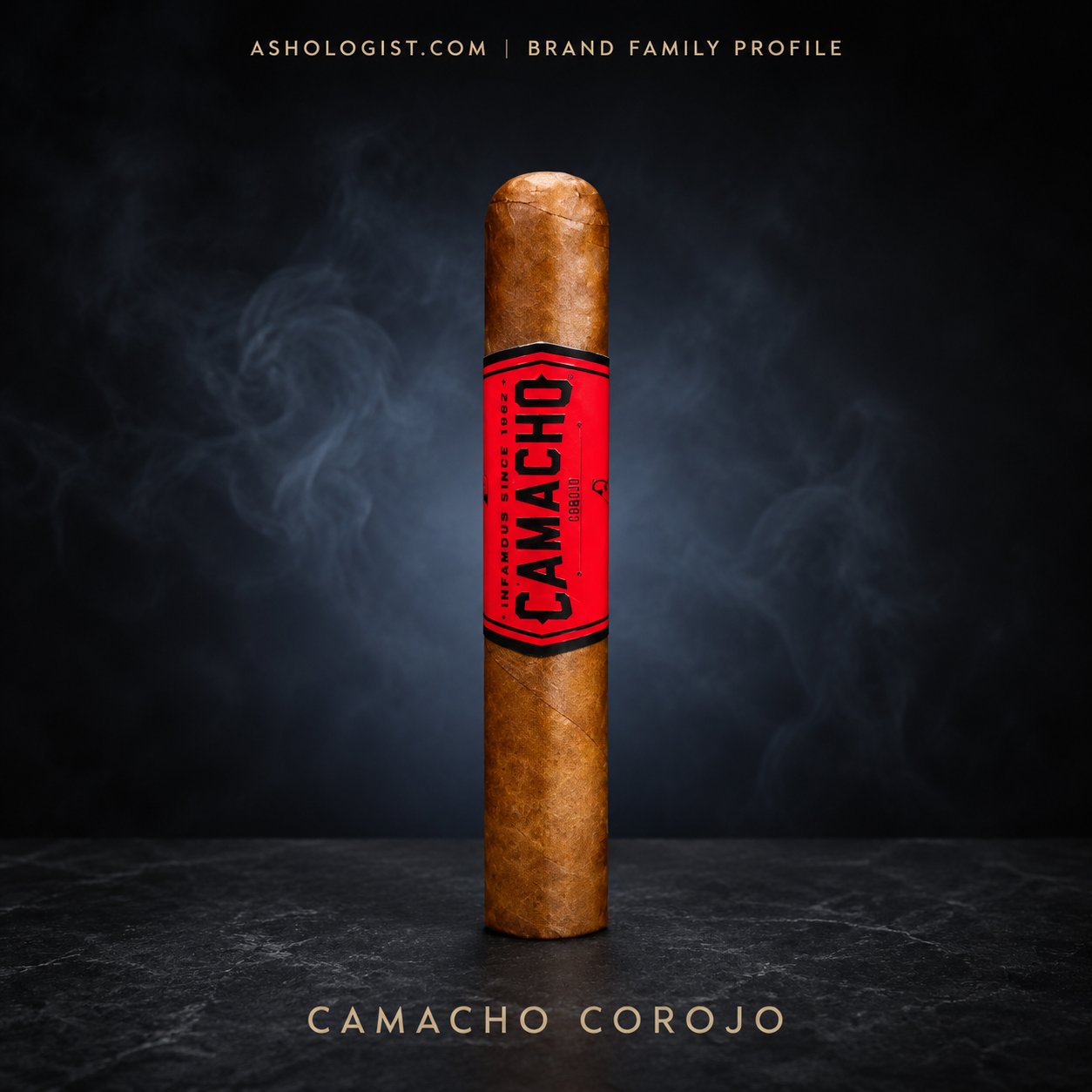 Camacho Corojo
The Honduran Corojo Family: Puro Identity, Core Formats and Box-Pressed Extensions
Camacho Corojo
The Honduran Corojo Family: Puro Identity, Core Formats and Box-Pressed Extensions
-
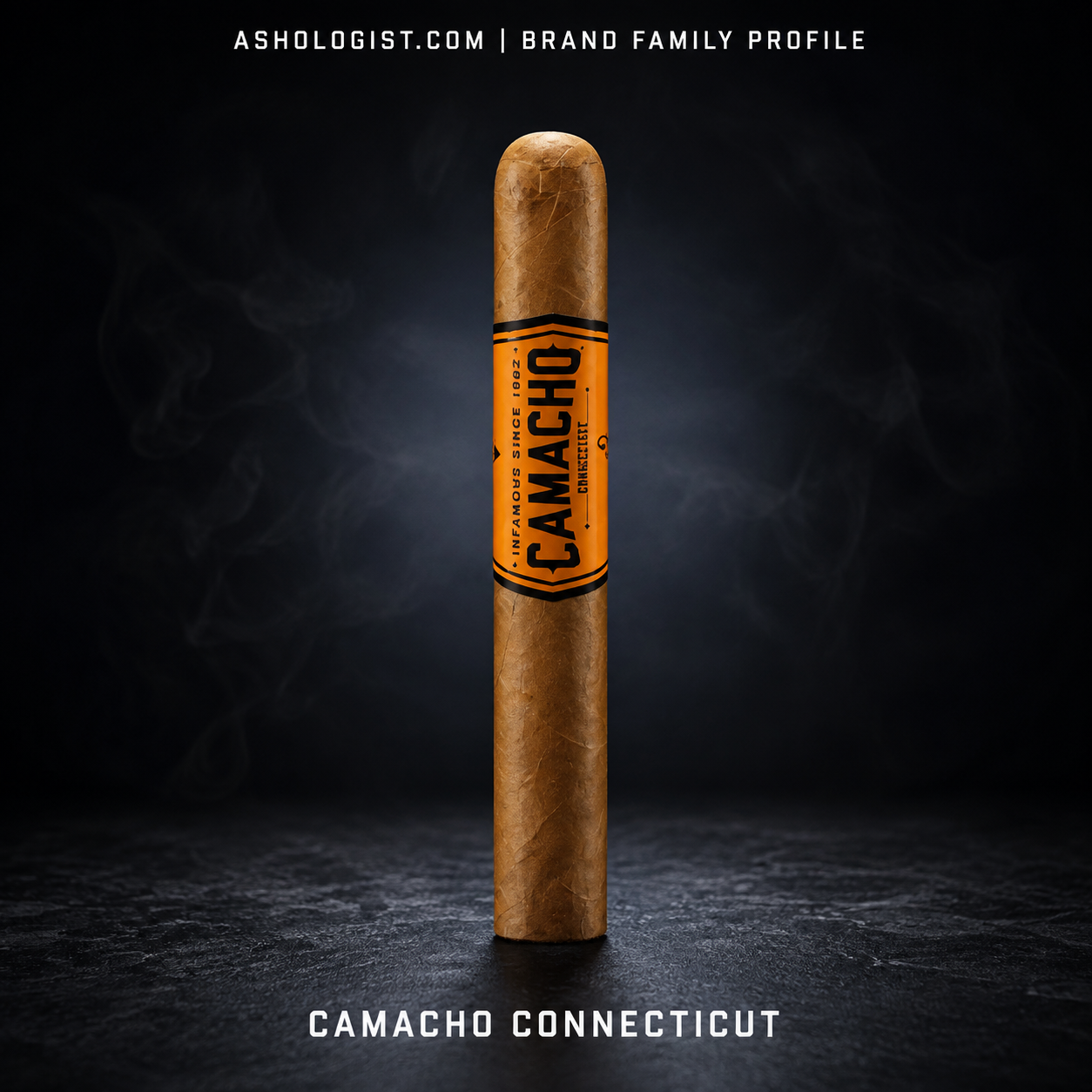 Camacho Connecticut
Ecuador Connecticut over Honduran and Dominican Tobacco in a Honduran-Made Family
Camacho Connecticut
Ecuador Connecticut over Honduran and Dominican Tobacco in a Honduran-Made Family
-
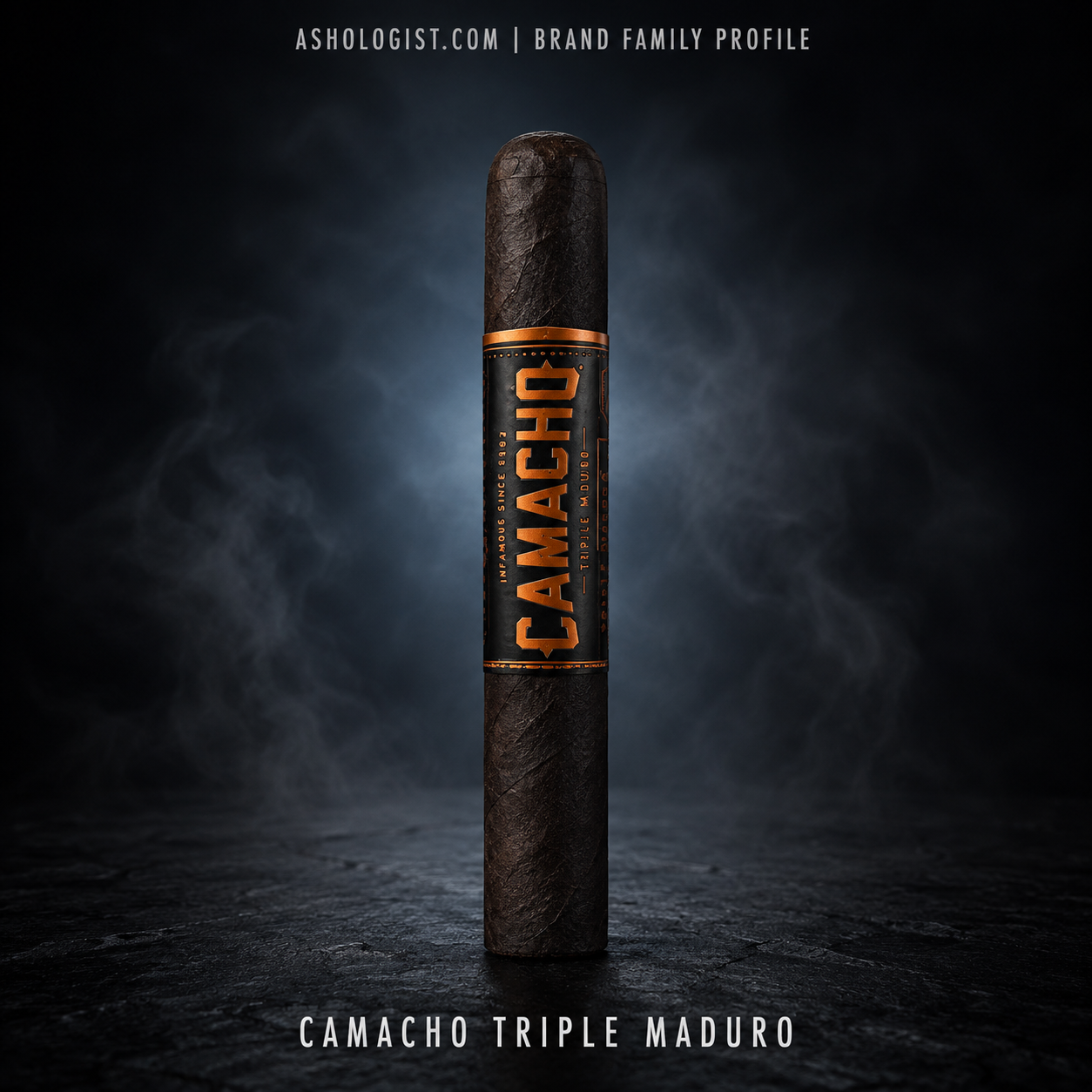 Camacho Triple Maduro
Maduro Wrapper, Binder and Filler in a Focused Honduran Core Collection
Camacho Triple Maduro
Maduro Wrapper, Binder and Filler in a Focused Honduran Core Collection
-
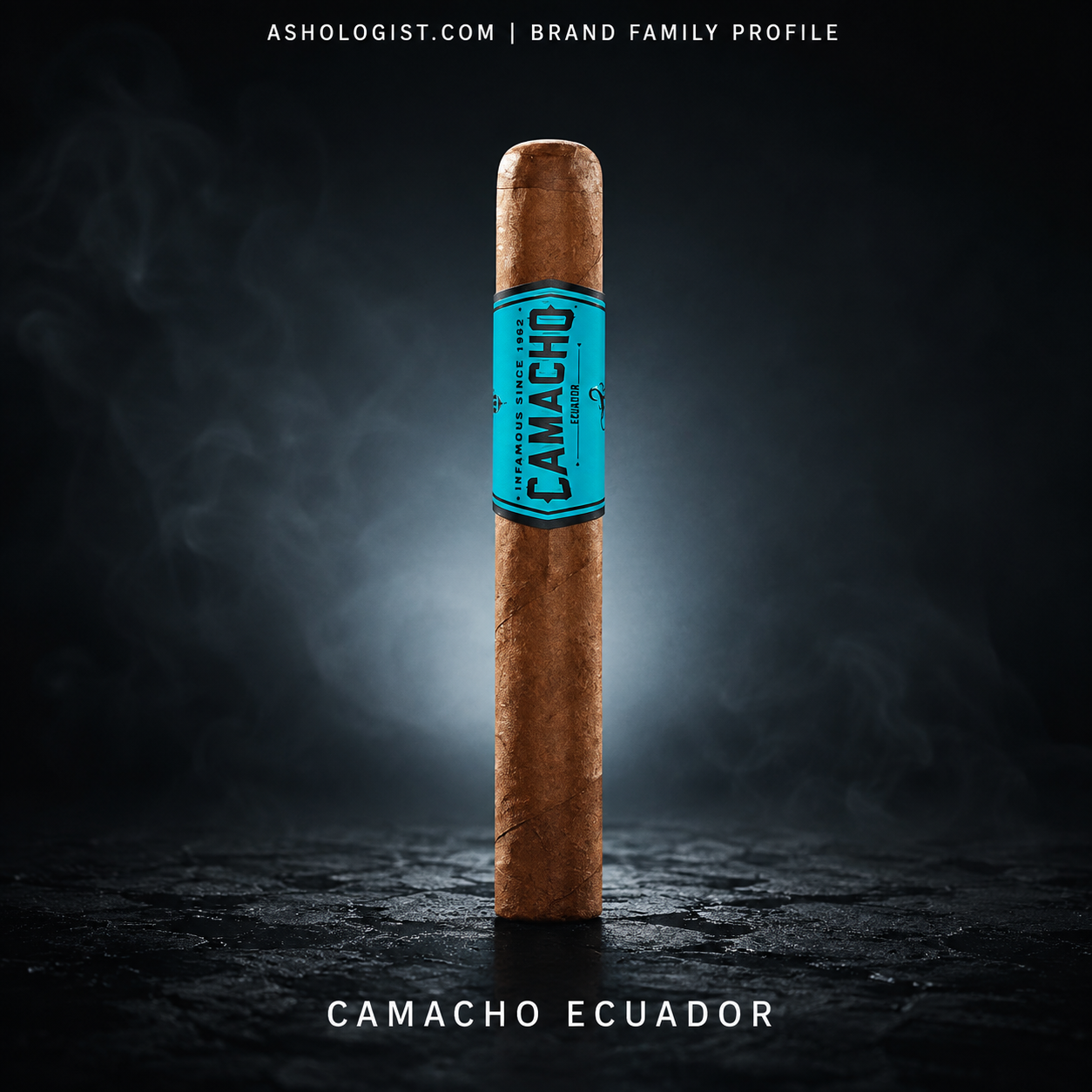 Camacho Ecuador
The Ecuador-Wrapped Blue-Band Branch of Camacho’s Honduran Core Collection
Camacho Ecuador
The Ecuador-Wrapped Blue-Band Branch of Camacho’s Honduran Core Collection
-
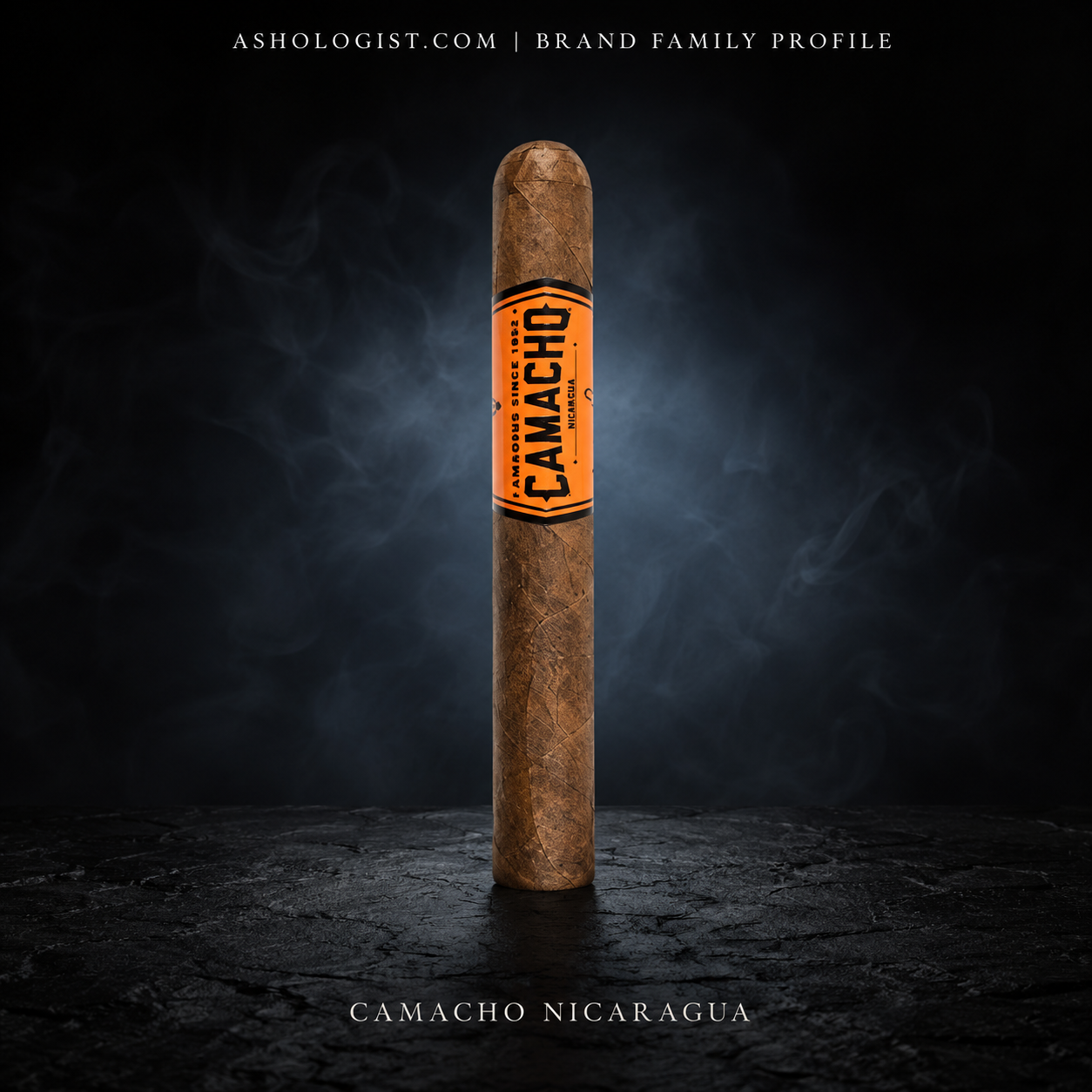 Camacho Nicaragua
The Nicaragua-Focused Core Branch in Camacho’s Honduran Portfolio
Camacho Nicaragua
The Nicaragua-Focused Core Branch in Camacho’s Honduran Portfolio
-
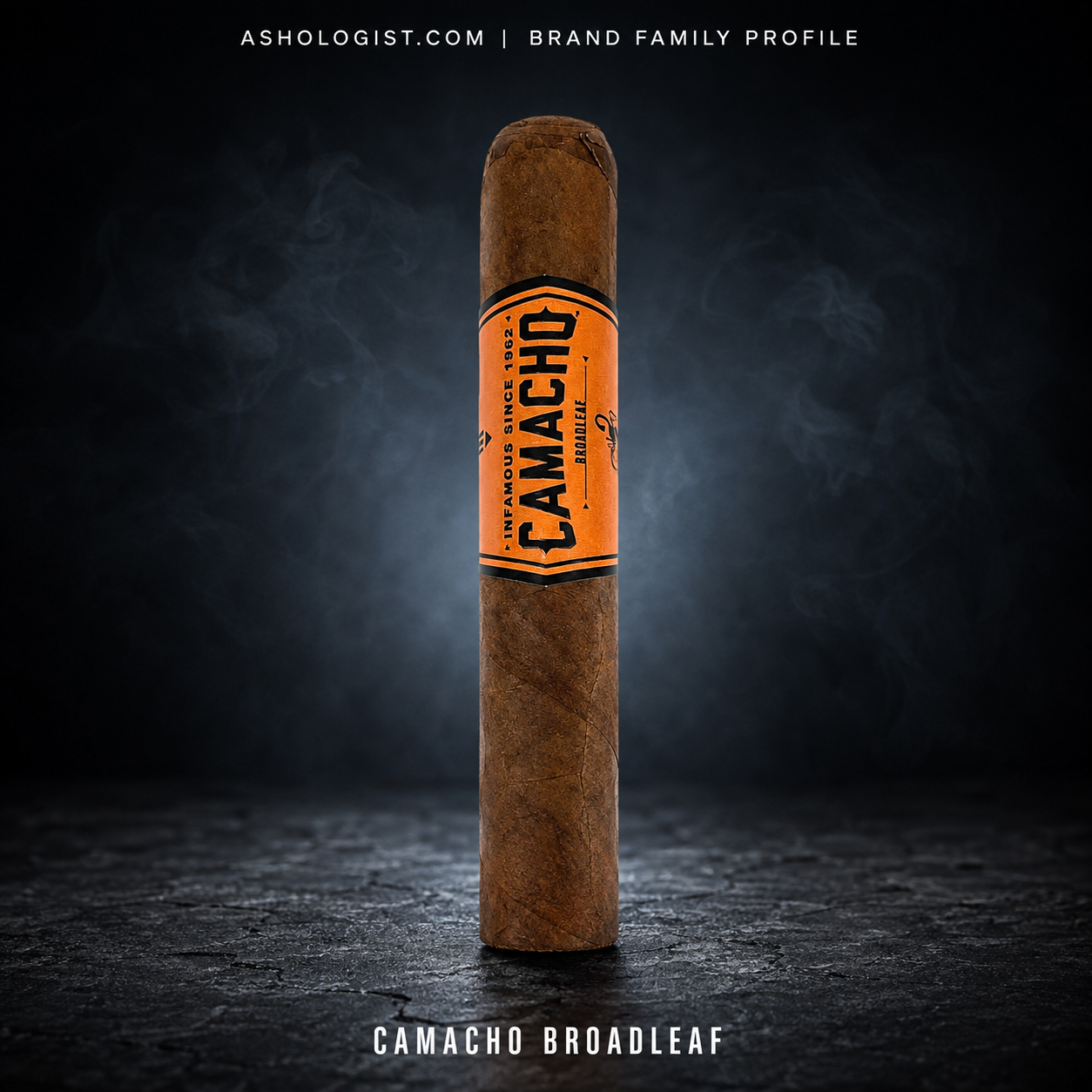 Camacho Broadleaf
The Broadleaf-Wrapped Core Branch of Camacho’s Honduran Portfolio
Camacho Broadleaf
The Broadleaf-Wrapped Core Branch of Camacho’s Honduran Portfolio
Frequently Asked Questions
When was Camacho founded?
Camacho traces its founding to Simón Camacho in 1961. The brand's later Honduran identity was developed under the Eiroa family.
Who built the modern Camacho brand?
Julio and Christian Eiroa built Camacho's modern Honduran production and Corojo reputation after the family acquired the brand in the 1990s.
Who owns Camacho today?
Oettinger Davidoff Group acquired Camacho in 2008 and continues to list it among the group's premium-cigar brands.
Where are Camacho cigars made?
Camacho cigars are made at Oettinger Davidoff's manufacturing site in Danlí, Honduras.
Is every Camacho a Honduran puro?
No. Camacho Corojo and certain heritage products emphasize Honduran tobacco, but several current lines use multinational blends.
What does Corojo mean for Camacho?
Corojo refers to a historically important Cuban seed variety. The Eiroa family cultivated Corojo-seed tobacco in Honduras and made it central to Camacho's identity.
What are Camacho's main cigar families?
The current portfolio is best understood through Corojo, Ecuador, Connecticut, Triple Maduro and Nicaragua, with Diploma, Liberty and other limited releases treated separately.
Is Christian Eiroa still part of Camacho?
No. Christian Eiroa remained for a period after the 2008 sale, then left and later formed CLE Cigar Company.
Ashologist’s Company Perspective
Camacho's strongest company story is the continuity of a Honduran provenance through a major ownership transition: the Eiroas established Corojo credibility, and Oettinger Davidoff retained Honduras as the brand's production center while modernizing its global presentation.
For Ashologist.com, the cleanest SEO structure separates the founder, the Eiroa era, Oettinger Davidoff ownership, the Danlí factory and the individual color-coded blends. That structure captures valuable history without treating every Camacho cigar as the same tobacco recipe.
Continue Reading
Editorial and Verification Note
This independent profile is not sponsored by Camacho, Oettinger Davidoff, the Eiroa family or any named company. History, ownership, manufacturing and portfolio relationships were checked against current Oettinger Davidoff material and established cigar-trade sources as of August 20, 2026. Roles, factories, blends and availability may change. Product-specific evidence belongs on individual Ashology and Cigar of the Year pages.