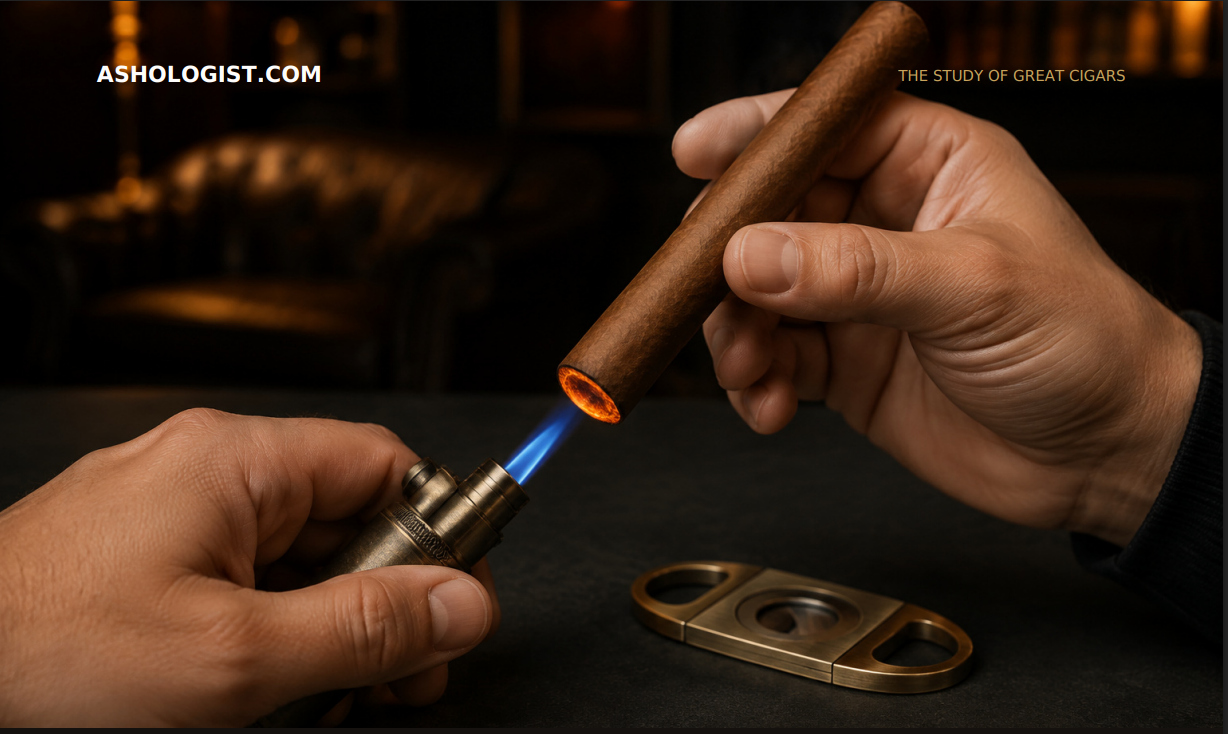
A premium cigar can be well constructed, carefully blended, and properly stored, but the experience can still be damaged before the first full draw.
Cutting too deeply can cause the wrapper to unravel. Lighting too aggressively can scorch the tobacco and create an uneven burn. The goal is not to make the process complicated. It is to prepare the cigar without interfering with how it was designed to perform.
A clean cut opens the draw. A patient light creates an even starting point. Together, they allow the cigar to reveal its construction, balance, and flavor naturally.
Understanding the Head and Foot
Before cutting or lighting a cigar, identify its two ends.
The head is the closed end placed in the mouth. It is normally finished with a small piece of wrapper leaf called the cap.
The foot is the open end that is lit. You can usually see the exposed filler tobacco inside it.
Only the capped head should be cut. The foot should remain untouched until the cigar is ready to be toasted and lit.
Where Should a Cigar Be Cut?
Examine the rounded head of the cigar. You should see one or more faint lines where the cap was applied.
Make the cut slightly above the cigar’s shoulder — the point where its rounded head begins to straighten into the body. The objective is to remove enough of the cap to create an open draw while leaving enough wrapper in place to hold the cigar together.
Cutting too little may restrict airflow. Cutting below the shoulder can loosen the wrapper and cause it to unravel.
When uncertain, begin with a conservative cut. You can remove slightly more if necessary, but you cannot replace a cap after cutting too deeply.
Choosing a Cigar Cutter
The best cutter is one that is sharp, clean, and appropriate for the cigar’s shape.
Straight Cut
A straight or guillotine cut creates a wide opening and is suitable for most traditional cigar shapes. A double-blade cutter generally applies pressure from both sides, helping produce a clean and balanced cut.
Position the cutter, hold the cigar steady, and complete the cut with one quick motion. Moving too slowly can crush or tear the cap.
V-Cut
A V-cutter removes a wedge from the head of the cigar. It creates a concentrated opening while leaving much of the cap intact.
The V-cut works particularly well with many larger ring gauges and box-pressed cigars. The cutter should be sharp enough to create a clean channel without splitting the wrapper.
Punch Cut
A punch creates a small circular opening in the cap. It removes less tobacco and can help preserve the cigar’s structure.
However, the smaller opening may produce a more concentrated draw. Punch cutters are also not appropriate for pointed shapes such as torpedoes or perfectos. For shape details, see Cigar Sizes Explained.
Test the Draw Before Lighting
After cutting the cigar, take a gentle cold draw before applying flame.
Air should move comfortably through the cigar. Some resistance is normal, but the draw should not feel completely blocked or unusually loose.
This first draw can also introduce the cigar’s unlit character. You may notice natural tobacco, cedar, earth, sweetness, spice, or other early impressions.
The cold draw is not the final flavor evaluation. It is an initial check of construction and airflow. When you are ready to study flavor more carefully, continue with How to Taste a Cigar.
Choose a Clean Flame
A butane lighter is commonly used because butane burns cleanly and does not normally introduce a noticeable odor or flavor.
A soft-flame lighter provides control and works well indoors. A torch lighter is more resistant to wind and can light a cigar quickly, but its concentrated heat requires greater distance and care.
Long wooden matches or a cedar spill may also be used. When using a match, allow the initial chemical flare to burn away before bringing it near the cigar.
Avoid candles and gasoline-style lighters. Their fuel, wax, or fragrance may affect the cigar’s aroma and flavor.
Toast the Foot First
Do not immediately place the cigar in your mouth and apply the flame directly to it.
Hold the cigar at a slight angle above the flame. The flame should approach the tobacco without being forced deeply into the foot.
Slowly rotate the cigar so heat reaches the entire outer edge. The tobacco will begin to darken and glow. This is known as toasting the foot.
Toasting prepares the filler, binder, and wrapper to burn together. It reduces the likelihood that one section will ignite faster than the rest.
The process should be controlled and even. The objective is to warm and ignite the tobacco — not to blacken the wrapper or blast the foot with excessive heat.
Complete the Light
Once the foot is evenly toasted, place the cigar in your mouth and take a few short, controlled draws while continuing to rotate it above the flame.
Do not pull the flame directly into the cigar. Allow the heat to meet the foot naturally.
After several draws, examine the foot. It should display an even orange glow across the surface. If a dark area remains, apply a small amount of flame only to that section.
A properly established burn gives the cigar the best opportunity to perform as intended.
Avoid Overheating the Cigar
More flame does not create a better light.
Excessive heat can produce sharp, bitter, or burnt flavors. It can also cause the wrapper to burn faster than the filler, creating an uneven burn line before the cigar has properly started.
Once the cigar is lit, smoke it patiently. Constant puffing raises the temperature and may interfere with flavor, balance, and combustion.
Let the cigar establish its own rhythm.
Common Cutting and Lighting Mistakes
Several avoidable mistakes can affect the experience:
- Cutting below the shoulder and causing the wrapper to unravel
- Using a dull cutter that crushes or tears the cap
- Applying the flame directly to the wrapper
- Lighting only the center of the foot
- Failing to rotate the cigar while toasting
- Holding a powerful torch too close
- Puffing too rapidly and overheating the tobacco
- Continuing to apply flame after the foot is already evenly lit
The solution is usually simple: use a sharp cutter, maintain control, rotate the cigar, and give the tobacco time to respond.
Can a Cigar Be Relit?
A cigar can be relit if it goes out.
First, remove any loose ash. Gently clear stale smoke from the cigar, then toast the foot again and relight it using short, controlled draws.
A cigar that is relit promptly will normally recover better than one left unfinished for an extended period. Some temporary bitterness may appear at first, but it can fade as the burn becomes established again.
The Ashology Perspective
Cutting and lighting are not rituals performed merely for appearance. They are the first practical tests of preparation and performance.
A proper cut respects the cigar’s construction. An even light allows the tobacco components to begin burning together. Patient smoking gives the blend the opportunity to demonstrate its balance, flavor, consistency, and development.
The objective is not perfection. It is to avoid interfering with the cigar before it has the chance to show what it can do.
A great cigar should be studied from the humidor to the final draw — and that study begins with a clean cut and an even light.
Frequently Asked Questions
Where should a cigar be cut?
Make the cut slightly above the cigar’s shoulder — the point where its rounded head begins to straighten into the body. Remove enough of the cap to create an open draw while leaving enough wrapper in place to hold the cigar together.
What is the best type of cigar cutter?
The best cutter is one that is sharp, clean, and appropriate for the cigar’s shape. A double-blade guillotine works for most traditional shapes, a V-cut suits many larger ring gauges and box-pressed cigars, and a punch preserves more of the cap but is not appropriate for pointed shapes such as torpedoes or perfectos.
Should you toast the foot before lighting a cigar?
Yes. Hold the cigar above the flame and rotate it so heat reaches the entire outer edge before taking draws. Toasting prepares the filler, binder, and wrapper to burn together and reduces the chance of an uneven start.
What kind of lighter should you use for a cigar?
A butane lighter is commonly preferred because butane burns cleanly. Soft-flame lighters, torch lighters used carefully, long wooden matches, or a cedar spill can also work. Avoid candles and gasoline-style lighters.
Can a cigar be relit?
Yes. Remove any loose ash, gently clear stale smoke, toast the foot again, and relight with short, controlled draws. A cigar relit promptly usually recovers better than one left unfinished for a long period.
— Master Ashologist
Ashology™ — The Study of Cigars