To a retailer, a cigar company's decision not to open every account can feel unnecessarily restrictive. If a licensed smoke shop is prepared to order and pay, why would a manufacturer turn away the business?
Because selling a premium cigar is not finished when a box leaves the warehouse. The product still has to be stored correctly, presented with care, explained by the staff, priced responsibly, sold through, and reordered. A company that opens every possible account may gain a quick shipment, yet weaken the market that is supposed to support the brand for years.
The goal should not be distribution everywhere. It should be the right distribution, supported by clear standards and fair treatment for qualified retailers.
More Accounts Do Not Always Create More Sales
The number of stores carrying a cigar is easy to count. Healthy sell-through is harder to build. When too many nearby accounts receive the same line, the existing customer base is divided among more shelves. Inventory may sit longer, reorders slow down, and retailers begin competing on price instead of service, selection, and experience.
That can create the appearance of growth at the manufacturer level while the retail market underneath the brand becomes less productive. Initial orders rise, but the reorder pattern weakens. The best distribution plan looks beyond the opening order and asks whether each account can help create repeat demand.
The Retailer Becomes Part of the Product Experience
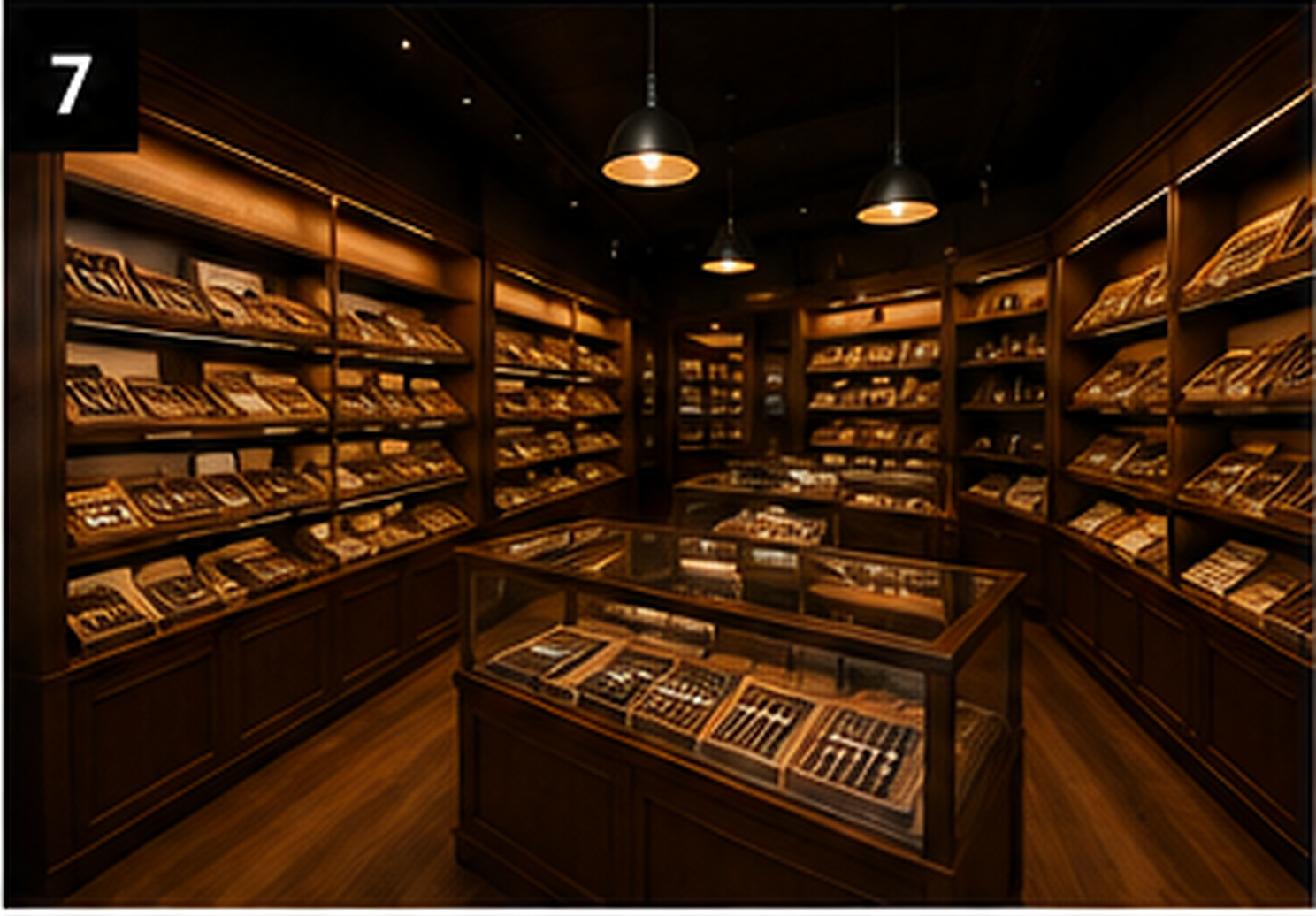
Premium cigars are sensitive products. A retailer must maintain the humidor, monitor inventory, rotate boxes when necessary, and recognize problems before the consumer does. Poor storage can damage the experience even when the cigar left the factory in excellent condition.
The consumer rarely separates that experience cleanly. A dry, over-humidified, damaged, or neglected cigar can become a judgment about the brand itself. For that reason, cigar companies have a legitimate interest in knowing whether a store can protect the product after delivery.
Not Every Smoke Shop Has the Same Business Model
The phrase smoke shop covers many kinds of businesses. One location may operate a serious premium-cigar program with a walk-in humidor, knowledgeable staff, events, and regular box customers. Another may focus primarily on cigarettes, vapor products, lottery, accessories, or convenience sales while keeping a few cigar boxes as secondary inventory.
Both can be legitimate businesses, but they are not automatically the same fit for every premium cigar line. A company may reasonably decide that a particular brand needs staff attention, humidor space, customer education, or a level of repeat demand that some stores are not built to provide.
Geographic Saturation Can Punish the Best Retailers
A retailer that invests in a line does more than buy inventory. The store may train employees, introduce the cigars to customers, host events, devote shelf space, and carry slow-moving sizes so the full presentation looks complete. If the same line is then opened across too many nearby stores, the retailer that built the demand may receive little protection for that investment.
This does not mean every account needs an exclusive territory. It means manufacturers should consider market density, consumer traffic, existing account performance, and the likelihood that a new account will create new demand rather than simply divide current sales.
Every Direct Account Has a Cost
Opening an account creates work beyond processing the first invoice. There may be credit review, sales calls, product education, samples, freight, order minimums, service questions, damaged-goods issues, collections, and ongoing follow-up. A very small or sporadic account may cost more to service directly than its order pattern supports.
That is one reason distributors remain important. A store that does not qualify for a direct relationship may still be able to purchase the brand through distribution, combine it with other products, and order in quantities that better match its business. Not receiving a direct account is not always a rejection of the retailer; sometimes it is a decision about the most workable route to market.
A Premium Brand Needs More Than Shelf Space
Cigar customers often want to know who makes a cigar, what distinguishes the blend, where it fits in strength and body, and why it deserves a place beside familiar choices. A box placed in a humidor without staff knowledge or a plan can quickly become background decoration.
A strong retail partner does not have to be the largest store in the market. It does need a believable plan to introduce the product, recommend it honestly, maintain the inventory, and reorder when customers respond. Commitment and execution can matter more than store size alone.
What a Responsible Cigar Company Should Evaluate
A responsible account decision should be based on business standards that can be explained. Those standards may include proper licensing and compliance practices, humidor conditions, available display space, the retailer's existing premium-cigar business, staff knowledge, credit history, opening-order capacity, reorder potential, market coverage, and the store's willingness to represent the line accurately.
No single factor should become an excuse to dismiss a serious smaller retailer. A well-run independent shop with loyal premium customers may be a better home for a brand than a larger account that buys widely but supports very little.
Selectivity Should Not Become Favoritism
Selective distribution makes sense only when the selection is disciplined. It should not mean unclear rules, personal favoritism, unexplained delays, or different requirements for similar accounts. A manufacturer that asks retailers to invest in its brand should be willing to state what qualifies an account and provide a timely answer.
When a store does not qualify, the explanation should be direct and professional. If the problem can be corrected, the company should say what would need to change. If the market is already sufficiently covered, it should say so. Clear standards preserve respect even when the answer is no.
What Retailers Can Do Before Requesting an Account
A retailer can make the decision easier by presenting more than a request for a price list. Show the condition and size of the humidor, describe the premium-cigar customer base, explain which brands and price points sell, identify the space available for the line, and outline a realistic opening order and reorder plan. Staff education, events, customer communication, and a record of dependable payment can strengthen the case.
Retailers should also ask for the company's direct-account requirements in writing. That turns a vague request into a business conversation and makes it possible to understand whether the obstacle is temporary, operational, geographic, or permanent.
The Best Distribution Is Built for Reorders
A cigar company should not measure distribution only by how many accounts it can open. It should measure whether those accounts protect the product, build consumer confidence, sell through inventory, and reorder without constant discounting or pressure.
Every qualified smoke shop deserves fair consideration. But every cigar brand does not belong in every account. The healthiest system is selective without being secretive, protective without being arbitrary, and relationship-driven without becoming a closed circle.
That approach serves the manufacturer, the retailer, and ultimately the cigar smoker who expects the product to arrive in the condition and setting the brand promised.
Frequently Asked Questions
Why don't cigar companies sell to every smoke shop?
Premium cigar companies may limit distribution to stores that can protect the product, support the brand, maintain healthy inventory turnover, meet account requirements, and add useful market coverage.
What do cigar companies look for in a retail account?
Common considerations include humidor quality, premium-cigar sales, staff knowledge, display space, compliance practices, creditworthiness, order capacity, reorder potential, market fit, and the retailer's plan for supporting the line.
Can a smaller independent smoke shop qualify for a direct account?
Yes. Store size alone should not determine qualification. A smaller retailer with a strong premium-cigar customer base, good product care, dependable payment, and consistent sell-through may be an excellent partner.
Why might a cigar company direct a store to a distributor?
Distribution can let stores combine brands, buy in quantities suited to their business, and receive efficient service. A distributor route can be the right economic structure even when the manufacturer wants its cigars available in that store.
Does selective distribution guarantee a retailer an exclusive territory?
No. Managing the number and placement of accounts is not the same as granting exclusivity. Any exclusive territory would need to be specifically established between the parties.
How can a retailer improve its chances of opening an account?
Present a clear business case: document the humidor and customer base, show relevant sales experience, identify shelf space, propose a realistic opening order, explain how staff will support the brand, and ask for the company's qualification standards.
Related Reading
- What Retailers Should Expect From a Cigar Manufacturer
- The Manufacturer-Distributor-Retailer Relationship
- Why Retailer Relationships Matter After the Order Is Written
- The Sales Rep Is Part of the Brand
- When Selling Becomes Overselling
- Allocations, Backorders & Communication
- What Makes a Great Cigar Sales Representative?
- What Retailers Wish Cigar Sales Representatives Understood