“Strong” can be an unclear description of a cigar. One person may be describing its nicotine impact, while another means a pronounced flavor or a rich smoke texture. Separating those observations makes a tasting note easier to understand and much more useful when you compare cigars.
At Ashologist.com, The Study of Cigars includes learning to describe an experience precisely. Our cigar tasting guide distinguishes strength, body, and flavor. They can influence the same experience while describing different things.
Strength describes nicotine impact
In this vocabulary, strength refers to perceived nicotine intensity and physical impact. It is not a flavor note or a laboratory measurement of nicotine content. Descriptions such as mild, medium, and full are broad guides to perception.
When someone calls a cigar strong, ask what they noticed. Did they mean its physical effect, its peppery taste, or the fullness of the smoke? That single follow-up question often makes the original description much clearer.
Body describes the feel of the smoke
Body refers to the perceived weight, richness, and texture of smoke on the palate. You might describe the body as light, medium, or full, then add a more specific observation about how the smoke felt.
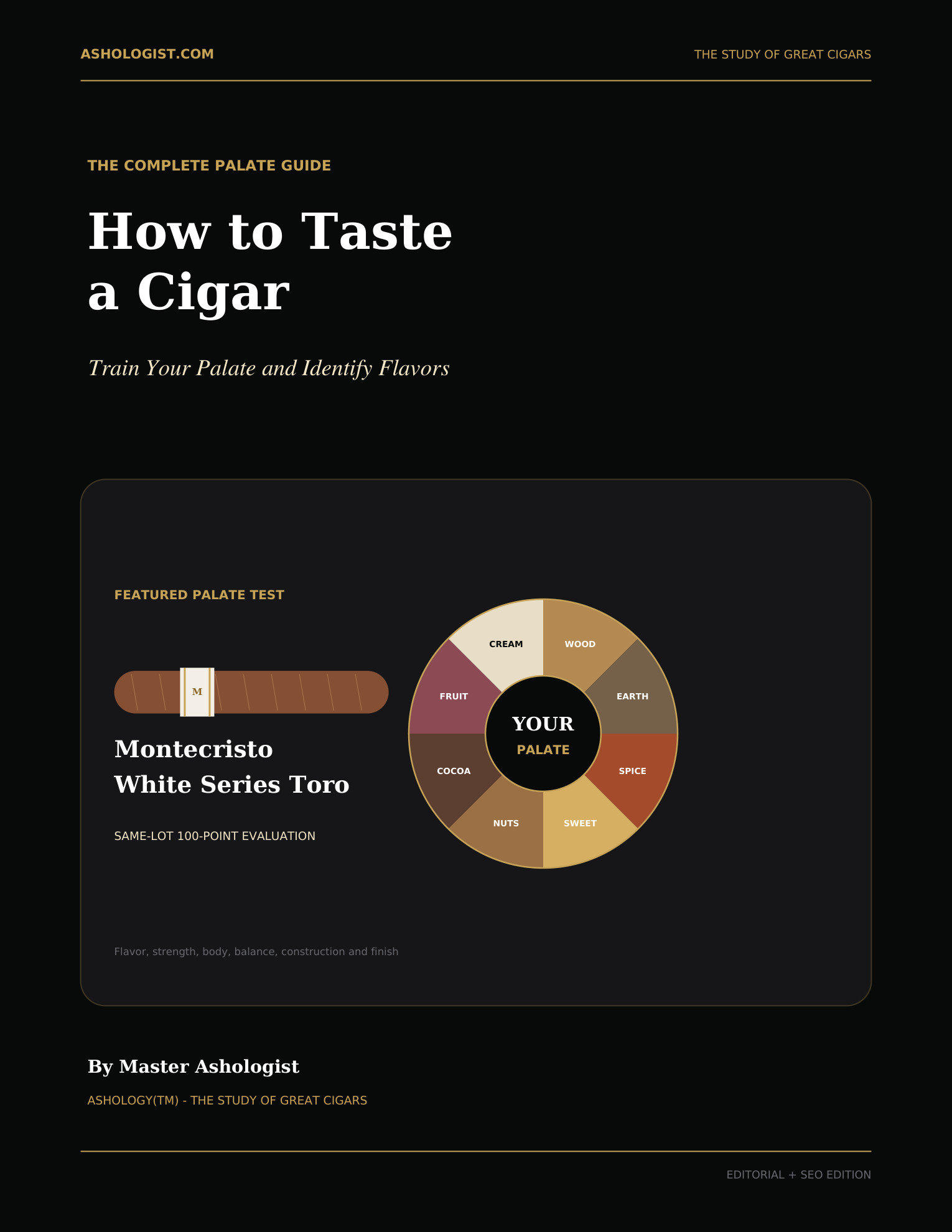
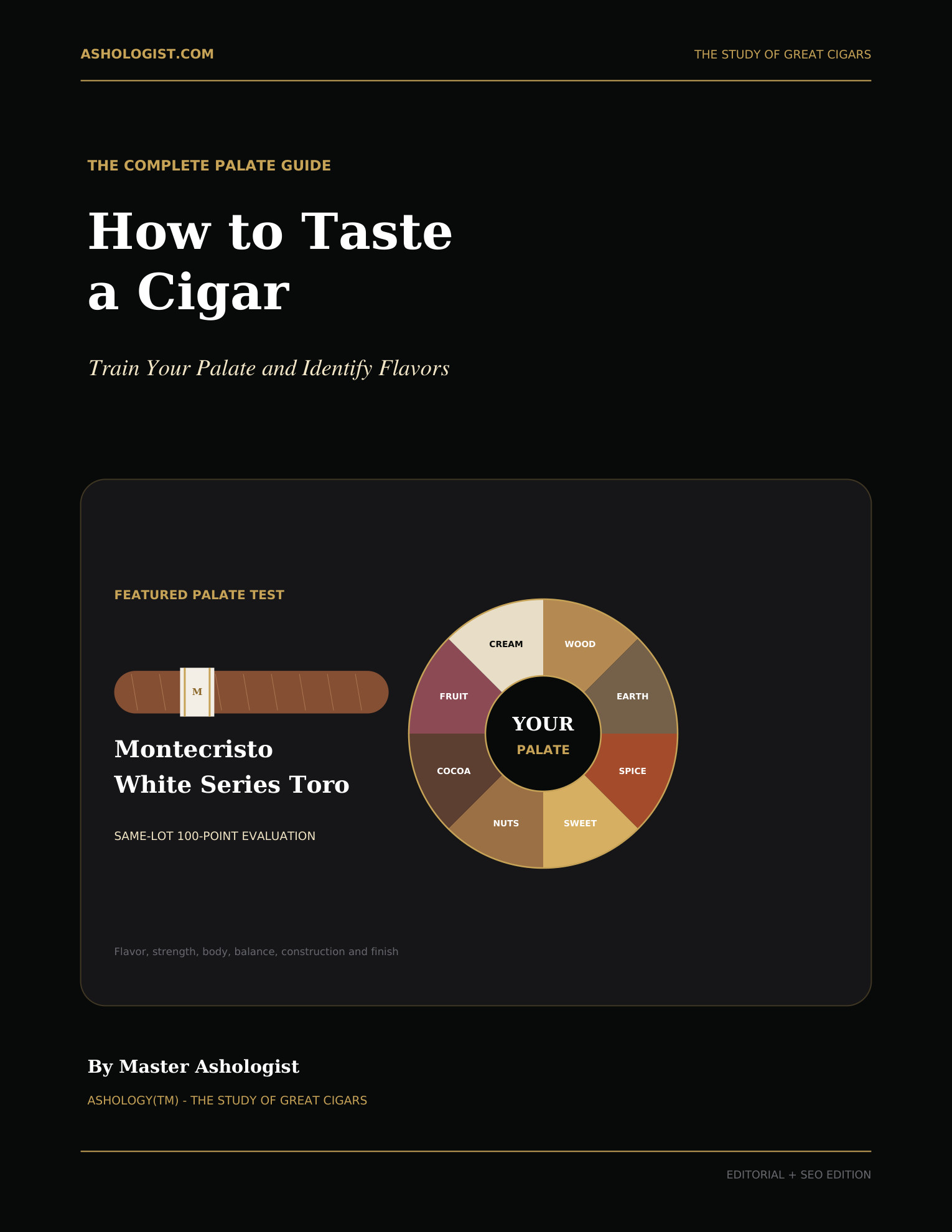
A body description can sit alongside a different strength description. Ashologist’s available palate tests, for example, list the Montecristo White Series Toro with mild-to-medium strength and medium body. Those separate fields help readers see that the two terms are not interchangeable.
Flavor names the impressions you notice
Flavor describes what the taste and aroma bring to mind. Cedar, cocoa, toast, and pepper are examples of descriptive language. A pepper impression alone does not establish nicotine strength, just as a creamy impression does not establish the full body of a cigar.
Use words that mean something to you. If “toasted bread” is clear and “brioche” feels borrowed, write toasted bread. The value of your note comes from whether it accurately preserves the experience, not how elaborate it sounds.
Keep description separate from quality
Full strength is not automatically a higher score. Nor does a long list of flavor words prove that a cigar performed well. Our cigar scoring guide considers the experience across construction, flavor, balance, and other evaluation categories.
A useful note explains the judgment. Instead of writing only “powerful and excellent,” describe what made the experience successful. If you preferred a gentler cigar, identify the qualities you valued. Preferences become easier to understand when the reasons remain attached to them.
Try a more precise tasting note
Consider this fictional example: “Medium strength. The smoke felt full on the palate. Toast and cocoa were the clearest flavors, with pepper more noticeable near the end. I preferred the middle portion because the flavors were easier to distinguish.”
That note makes several separate observations without claiming a universal answer. It also gives the writer something to revisit. On another occasion, they can ask whether the same impressions appeared and whether their preference remained the same. The example is a writing exercise, not a review of a particular cigar.
For your next evaluation, give strength, body, and flavor their own sentences before assigning an overall judgment. If a description feels uncertain, say so. “I could not identify a clear flavor beyond tobacco” is a useful observation when it is accurate.
Use the Ashology palate evaluation to record your own assessment and compare it with the Ashologist. The purpose of a precise vocabulary is to help you explain what you observed, including where your experience differs.