Learning how to rate a cigar begins with one simple rule: evaluate what the cigar actually delivers. Price, reputation, rarity, and the name on the band can create expectations, but the smoking experience must support the final score.
The Ashology 100-point cigar rating system provides a consistent way to examine construction, draw, burn, aroma, flavor, balance, complexity, and overall experience. It does not eliminate personal taste. It helps smokers understand and explain it.
What Does a Cigar Rating Measure?
A useful cigar score should reflect the complete experience rather than one strong moment. A cigar may begin with excellent flavor but struggle with its burn. Another may be perfectly constructed but remain one-dimensional. Each part contributes to the total evaluation.
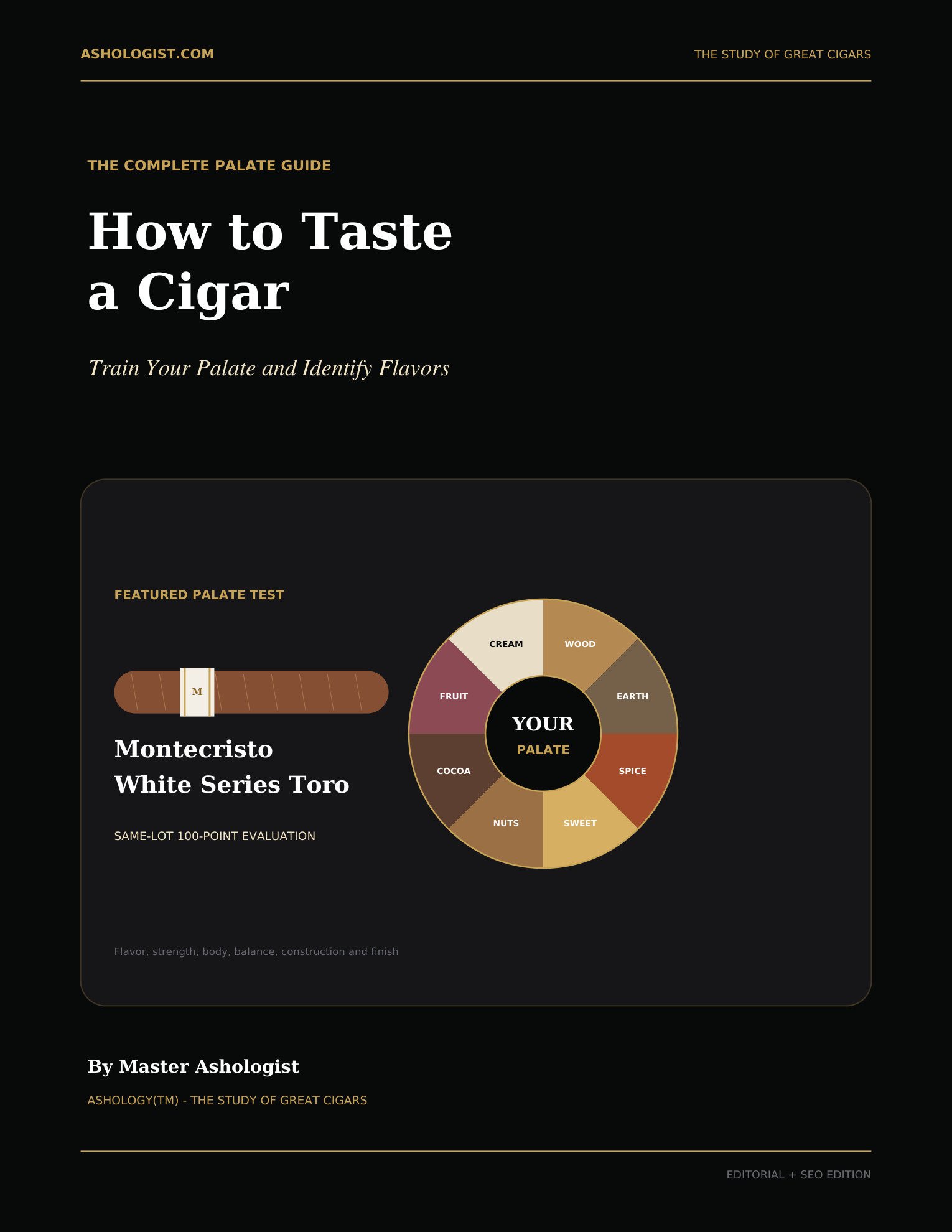
For the most accurate comparison, smoke in a comfortable setting, avoid rushing, and record observations while the experience is fresh. Use the same basic process each time you rate a cigar. The Ashology 100-point palate test on Ashologist.com gives smokers a practical place to apply that structure.
1. Examine the Cigar Before Lighting
Begin with construction. Look at the wrapper, seams, cap, shape, and overall appearance. Gently check the cigar for areas that feel unusually soft, hard, or uneven. A well-constructed cigar should feel consistent without being overpacked or underfilled.
Notice the aroma from the wrapper and foot. These first observations establish expectations, but they should not determine the score before the cigar is lit.
2. Evaluate the Draw and Burn
After cutting the cigar, test the cold draw. Air should pass through with comfortable resistance. A draw that is too tight can restrict smoke and flavor, while a draw that is too loose can cause the cigar to burn hot and quickly.
Once lit, watch the burn line, ash, smoke production, and combustion. Minor corrections may happen, but repeated relights, tunneling, canoeing, or an unstable burn should affect the evaluation.
3. Study Aroma and Flavor
Flavor is more than identifying individual notes. Consider clarity, intensity, harmony, and development. Common impressions may include cedar, earth, leather, pepper, cocoa, coffee, nuts, cream, sweetness, or toast, but smokers do not need to find the same flavors.
Also consider the aroma of the smoke and how the cigar changes from the first third through the final third. A cigar with clear transitions may show greater complexity than one that remains unchanged.
4. Judge Balance and Complexity
Balance describes how well the cigar's strength, body, aroma, and flavors work together. Complexity describes the depth, variety, and development of the experience. A powerful cigar can still be balanced, and a mild cigar can still be complex.
Avoid awarding points only because a cigar is strong. Strength is a characteristic, not an automatic measure of quality.
5. Score the Overall Experience
The final cigar score should consider every category together. Ask whether the cigar was enjoyable, consistent, memorable, and worth smoking again. The overall score should match the complete experience rather than simply averaging isolated moments.
Using the same cigar scoring guide over time makes comparisons more meaningful and helps smokers recognize their own preferences.
What Is an Ashologist?
An Ashologist studies cigars through careful observation, structured evaluation, and comparison. Ashology is the method, and an Ashologist applies that method while developing a deeper understanding of construction, performance, aroma, and flavor.
Ashologist.com is built around The Study of Cigars — giving experienced smokers, beginners, and retailers a clear way to evaluate cigars and communicate what they discover. That same evaluation philosophy informs championship competition on CigarOfTheYear.com and accessible performance awards on ValueCigarOfTheYear.com.
Rate the cigar, record the experience, and learn your palate. That is the foundation of Ashology.