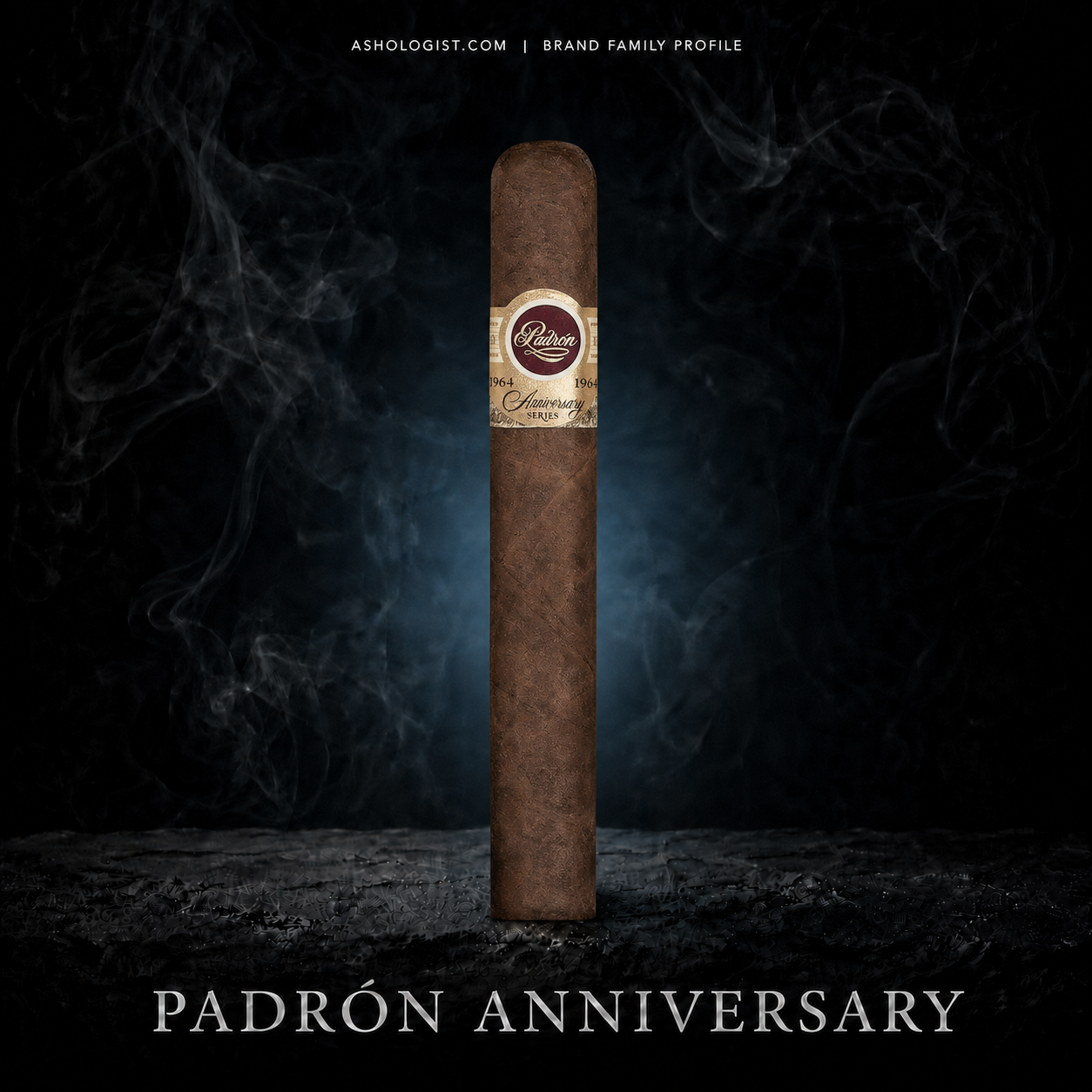
Brand Family Profile
Padrón Anniversary
The Padrón Family’s Commemorative Portfolio: 1964 Anniversary, 1926 Serie, Family Reserve and Milestone Releases
Manufacturer: Padrón
Last verified August 21, 2026
Padrón Anniversary at a Glance
- Brand owner
- Padrón family
- Company founded
- 1964, Miami
- Primary production
- Nicaragua
- Distribution and final handling
- Little Havana, Miami
- Foundational anniversary line
- 1964 Anniversary Series
- Other principal collections
- 1926 Serie and Family Reserve
- Brand model
- Aged-tobacco commemorative portfolio
Padrón family Company founded 1964, Miami Primary production Nicaragua Distribution and final handling Little Havana, Miami Foundational anniversary line 1964 Anniversary Series Other principal collections 1926 Serie and Family Reserve Brand model Aged-tobacco commemorative portfolio
From a $600 Beginning to a Family Legacy
José Orlando Padrón founded Padrón Cigars in Miami in September 1964 after saving $600 earned through gardening and carpentry. The small hammer he used became “el martillito,” a lasting symbol of the family’s work ethic and independence. Padrón later developed its tobacco and manufacturing base in Nicaragua. Today the company describes a vertically integrated process extending from seed selection and farming through fermentation, aging, cigar production, final sorting and distribution.
Why Anniversary Means More Than One Line
“Padrón Anniversary” is useful as an editorial family label, but the company organizes its commemorative cigars into distinct official series. The 1964 Anniversary Series, 1926 Serie, Family Reserve and milestone releases each have their own purpose and tobacco-aging program. The page should therefore explain the portfolio relationship without inventing a single umbrella blend. Individual series and cigars retain their official names, release dates and specifications.
The 1964 Anniversary Series
Introduced in 1994 for Padrón’s 30th anniversary, the 1964 Anniversary Series established the company’s modern commemorative portfolio. Padrón uses sun-grown Nicaraguan tobacco aged four years and presents the line in a traditional box-pressed format. Natural and maduro versions are available. Numbered guarantee bands were introduced to help protect buyers from counterfeiting, an important part of the series’ identity and authenticity story.
The 1926 Serie
Padrón introduced the 1926 Serie in 2002 to commemorate José O. Padrón’s 75th birthday. It is a separate box-pressed line made with tobacco aged five years and offered in natural and maduro wrappers. The name refers to the founder’s birth year, not the company’s founding date. Product pages should preserve the official “1926 Serie” wording and attach specifications to the named cigar. Family Reserve and Family Dates Padrón Family Reserve grew from cigars once reserved for the family. Its numbered releases commemorate important anniversary dates and use tobacco aged ten years according to Padrón’s current portfolio description. The numbered Family Reserve cigars are individual releases, not sizes of the 1964 Anniversary blend. Their exact meaning, wrapper and availability should remain attached to each official product record.
Ownership, Brand Architecture and Production Model
Padrón remains family owned and controls its Nicaraguan tobacco and cigar-making operations. Finished cigars are checked, selected, sorted, boxed and distributed through the company’s Little Havana operation in Miami. The anniversary architecture combines enduring series—1964 Anniversary, 1926 Serie and Family Reserve—with milestone cigars such as the 50th and 60th Anniversary releases and other special projects.
Padrón Anniversary in the Ashology Network
The family page should connect the Padrón manufacturer profile to 1964 Anniversary, 1926 Serie, Family Reserve and milestone-release pages. It should also connect Padrón’s 60th Anniversary Perfecto to its 2026 Cigar of the Year championship record. The anniversary family should not receive one universal Ashology score. Each series, wrapper and vitola is a separate evaluation subject, and only a named cigar can carry a score, matchup record or award.
Principal Brand-Family Map
This map explains the major commemorative branches without becoming a complete size catalog. Exact vitolas, samplers, retailer allocations and retired releases should live in structured product records. Tasting notes, scores and tournament results belong on evaluated-cigar pages.
| Line / Collection | Role in the Family | Editorial Identity |
|---|---|---|
| 1964 Anniversary | Foundational commemorative series. | 30th anniversary; four-year-aged tobacco |
| 1926 Serie | Founder-birthday series. | 75th birthday; five-year-aged tobacco |
| Family Reserve | Family-date collection. | Numbered cigars; ten-year-aged tobacco |
| 50th Anniversary | Five-decade milestone projects. | Edition and presentation specific |
| 60th Anniversary | Six-decade limited cigar. | Natural and maduro milestone release |
| Special Releases | Rare commemorative projects. | Release-specific documentation |
| Samplers / gifts | Curated portfolio presentations. | Contents and year specific |
| Named vitolas | Product records under each series. | Size-specific evaluation only |
Frequently Asked Questions
Who makes Padrón Anniversary cigars?
Padrón Anniversary cigars are made by the family-owned Padrón company through its vertically integrated Nicaraguan tobacco and manufacturing operation.
When was the 1964 Anniversary Series introduced?
It was introduced in 1994 to commemorate Padrón’s 30th anniversary.
What does the 1926 Serie commemorate?
The 1926 Serie premiered in 2002 to commemorate founder José O. Padrón’s 75th birthday; 1926 is his birth year.
Are 1964 Anniversary and 1926 Serie the same blend?
No. They are separate series with different commemorative purposes and tobacco-aging programs.
What is Padrón Family Reserve?
Family Reserve is a collection of numbered cigars tied to significant family anniversary dates and made with tobacco aged ten years.
Are Padrón Anniversary cigars box pressed?
The official 1964 Anniversary and 1926 Serie collections are box pressed. Other commemorative cigars should be verified individually.
Why do some Padrón cigars have numbered bands?
Padrón uses individually numbered integrated guarantee bands on key premium collections to help safeguard against counterfeiting.
Which Padrón cigar won the 2026 Cigar of the Year?
The Padrón 60th Anniversary Perfecto was the 2026 Cigar of the Year champion. Its detailed score and matchup evidence belong on the evaluated-cigar and championship pages.
Ashologist’s Brand Perspective
Padrón’s anniversary portfolio works because commemoration is tied to real family history and production choices. The dates, aging programs, numbered bands and Nicaraguan operations make each collection more than a packaging exercise. For Ashologist.com, the cleanest SEO structure separates Padrón as manufacturer, Padrón Anniversary as the family hub, the official commemorative series as branches and evaluated cigars as product pages. This creates search depth without thin pages for every size.
More from Padrón
Continue Reading
Editorial and Verification Note
This independent profile is not sponsored by Padrón, any distributor or retailer. Company history, portfolio structure, manufacturing and current series information were checked against official Padrón sources as of August 21, 2026. Blends, sizes, packaging and availability may change. Product-specific evidence belongs on individual Ashology and Cigar of the Year pages.
Primary Brand Sources
- Padrón - Official 1964 Anniversary Series
- Padrón - Official 1926 Serie
- Padrón - Official Family Reserve
- Padrón - Official 60th Anniversary
- Padrón - Official Cigar Offering
- Padrón - Official Vertical Integration
- Padrón - Official José O. Padrón History
- Padrón - Official Hammer Story
- Padrón - Official Integrated Banding
- Padrón - Official Gift Packages and Samplers
- Padrón - Official Photo History
- Cigar of the Year - Competition Home
Sources without a linked URL above are publicly available but were not on file with a direct link at time of publishing.