Manufacturer Profile
Oliva
Cuban Family Roots, Nicaraguan Tobacco and a Flagship-Driven Portfolio
Last verified August 19, 2026
Oliva at a Glance
- Family tobacco heritage
- 1886, when Melanio Oliva began growing tobacco in Pinar del Rio, Cuba
- Ownership
- Part of the family-owned Vandermarliere Cigar Family; acquired by J. Cortes in 2016
- Group leadership
- Frederik Vandermarliere, owner and chief executive of the Vandermarliere Cigar Family
- Manufacturing identity
- Handmade premium cigars and tobacco operations centered in Esteli and other Nicaraguan growing regions
- Principal portfolio
- Serie V Melanio, Serie V, Serie O, Serie G, Connecticut Reserve, Master Blends 3, Gilberto Oliva and Flor de Oliva
Oliva Cigars is a premium cigar company whose family tobacco story begins in Pinar del Rio, Cuba, in 1886 and whose modern manufacturing identity is centered in Nicaragua. The brand is best understood through that migration: the Oliva family carried a multigenerational tobacco tradition from Cuba, established its growing base in Nicaragua and developed a portfolio led by Serie V and Serie V Melanio.
Today Oliva is part of the Vandermarliere Cigar Family. The Belgian family company J. Cortes purchased Oliva in 2016 and invested in its Nicaraguan production system while preserving the Oliva name and handmade-cigar focus.
From Pinar del Rio to Nicaragua
The official Oliva history begins with Melanio Oliva's first tobacco crop in Pinar del Rio in 1886. His work paused while he fought in the Cuban War of Independence, then resumed after the war. In the early 1920s, his son Facundo took over the family's fields and continued growing tobacco for decades.
The next transition came through Facundo's son, Gilberto. As Cuba's political and tobacco environment changed, Gilberto moved from cultivation into leaf brokerage. In the early 1960s he began searching outside Cuba for conditions that could support the character of tobacco he knew, traveling through Honduras, Panama, Mexico and the Philippines before settling on Nicaragua.
That movement is the central historical bridge in the Oliva story. Cuba supplies the family's origin and agricultural memory; Nicaragua supplies the land and operating base of the current cigar company. The manufacturer profile should keep those roles distinct. Oliva is not a Cuban manufacturer today, even though Cuban seed, family history and traditional methods remain central to its identity.
Ownership and Family Continuity
In 2016, the Vandermarliere family purchased Oliva through J. Cortes. The companies later came together under the Vandermarliere Cigar Family name, with Oliva serving as the group's principal handmade premium-cigar identity. Frederik Vandermarliere leads the family-owned group.
The acquisition marked a change in ownership, not a rejection of the Oliva heritage. Official Oliva materials continue to center Melanio, Facundo and Gilberto, and the current portfolio still includes names such as Serie V Melanio and Gilberto Oliva Reserva. A 2021 Oliva announcement also described product development involving both Frederik Vandermarliere and Gilberto Oliva, illustrating the continuing relationship between the two cigar families.
Nicaraguan Farms, Leaf and Factories
Oliva's official heritage materials identify the family as a major grower of Cuban-seed tobacco in Nicaragua. The portfolio reinforces that agricultural identity through recurring references to Esteli, Condega and Jalapa, three of the country's best-known growing regions. Serie O is the clearest example: the family is organized around the same seed grown in different regions to create a blended Nicaraguan expression.
Since the 2016 purchase, the Vandermarliere Cigar Family has expanded the production platform. Oliva states that the group rebuilt an existing facility in Esteli and constructed a new factory there. The company has also used box-level QR technology on selected products to connect consumers with information about who rolled a cigar and how its tobacco was treated and aged.
For the website, the useful point is not a static production count. It is the company's control over a broad Nicaraguan system: growing, processing, aging, blending and handmade cigar production. Facilities, acreage and output can change, so the manufacturer page should explain the structure and verify operating figures only when a current primary source is available.
What Makes Oliva Distinctive
Oliva combines a strong flagship with a clear progression through the portfolio. Serie V Melanio sits at the top of the brand story. Serie V provides the bold Nicaraguan foundation from which Melanio developed. Serie O and Serie G explain two different blending ideas, while Connecticut Reserve broadens the range toward a gentler wrapper position and Master Blends 3 preserves the company's small, artisanal side.
That structure makes Oliva well suited to an evergreen manufacturer hub. A visitor can understand the company through six or eight key families without reading an exhaustive inventory. Search engines receive a coherent entity page connecting the Oliva name to its Cuban roots, Nicaraguan operations, current owner and principal products. Individual cigar pages can then carry exact vitolas, blends, tasting notes, construction findings and Ashology scores.
The profile should also distinguish the core Oliva-branded portfolio from related group brands such as Nub and Cain. Those names are associated with the Oliva manufacturing organization, but they are better handled as related brands or future standalone pages than folded into a long list that obscures the Oliva family itself.
Oliva Brand Portfolio
This overview covers the principal current Oliva families presented on the company's official website. It does not attempt to list every vitola, Maduro branch, annual limited edition, sampler, market-specific release or retired cigar.
| Portfolio / Family | Position in the Range | Selected Names |
|---|---|---|
| Serie V Melanio | The prestige flagship, developed from the Serie V concept and named for the family's first documented tobacco grower. | Serie V Melanio and Serie V Melanio Maduro |
| Serie V | The bold Nicaraguan foundation of the modern portfolio and the parent identity behind Melanio. | Serie V and selected Maduro releases |
| Serie O | A region-driven family built around the Cuban tradition of cultivating the same seed in different growing areas. | Serie O and Serie O Maduro |
| Serie G | A Cameroon-led family that gives the range a distinct wrapper and blending position. | Serie G and Serie G Maduro |
| Connecticut Reserve | The portfolio's approachable Ecuadorian Connecticut expression over Nicaraguan components. | Connecticut Reserve |
| Master Blends 3 | The third entry in Oliva's limited artisanal Master Blends concept. | Master Blends 3 |
| Gilberto Oliva | A family-name collection honoring the generation that carried the tobacco search to Nicaragua. | Gilberto Oliva Reserva and Reserva Blanc |
| Flor de Oliva | A value-oriented family that extends Oliva's Nicaraguan tobacco identity beyond the flagship series. | Flor de Oliva, Flor Corojo, Flor Gold and Flor Maduro |
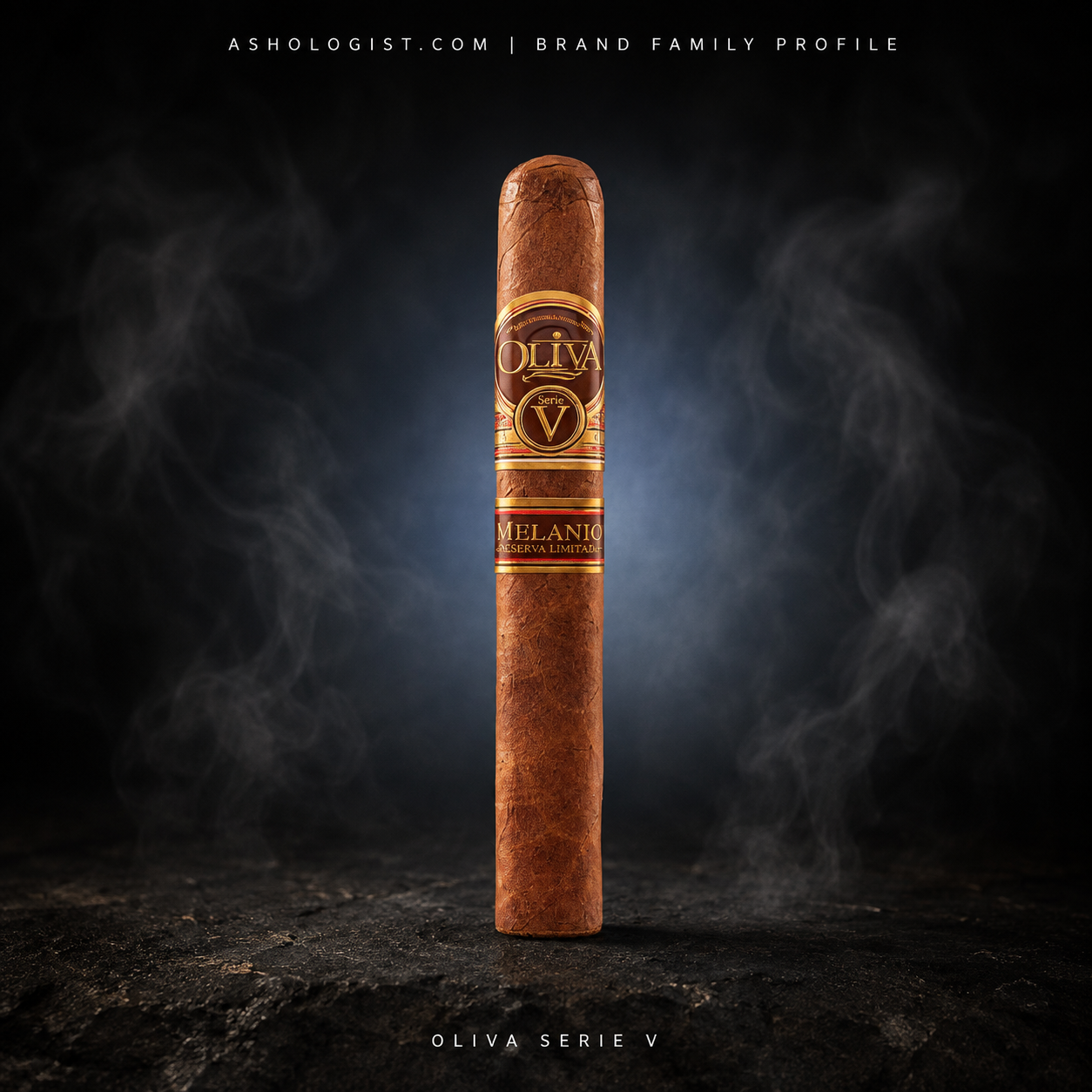
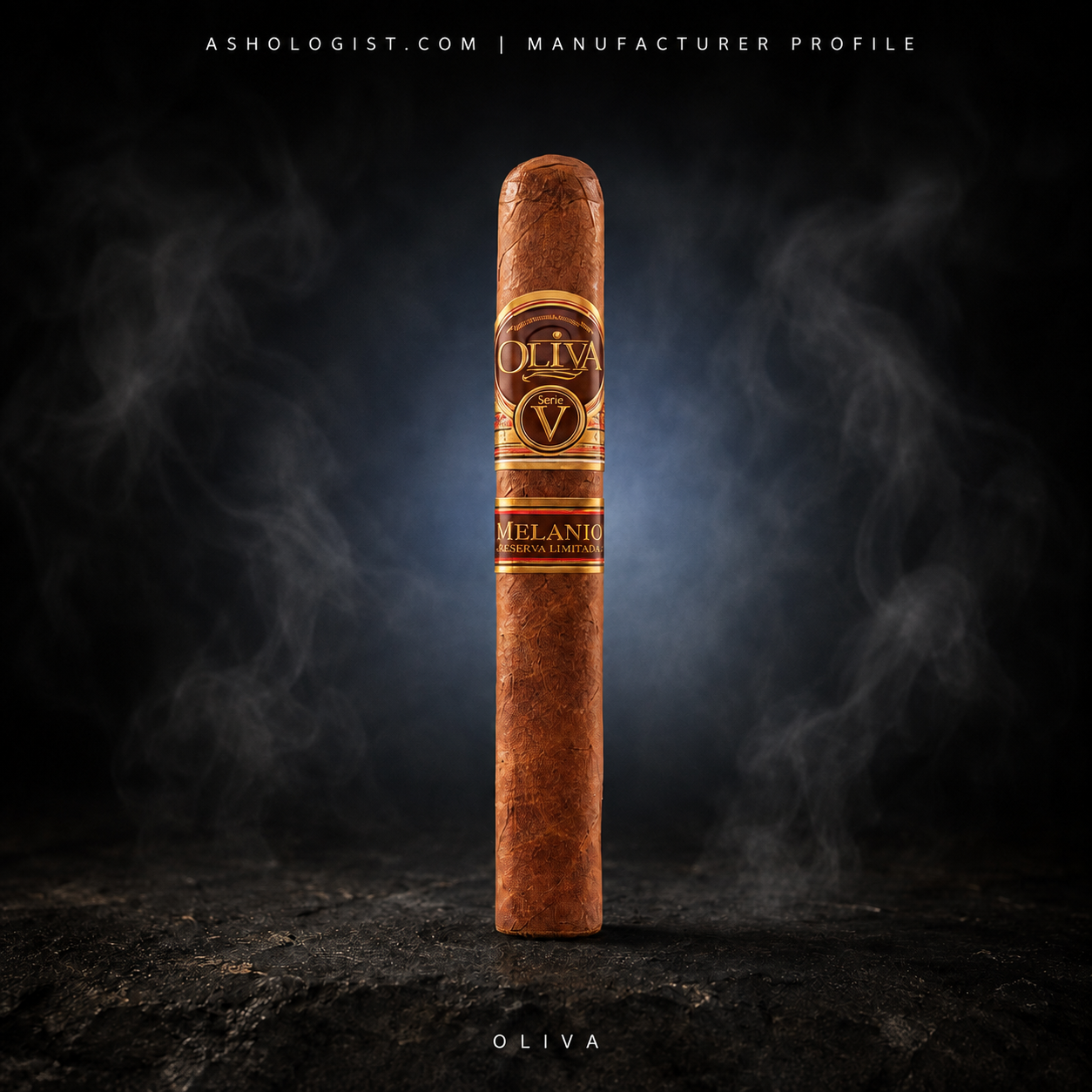
Serie V Melanio
Serie V Melanio is the clearest flagship for the Oliva name. It was developed over several years, uses a carefully aged Jalapa-centered blend and takes its name from Melanio Oliva. On the manufacturer page, its importance is historical and architectural: it links the highest-profile current family to the first generation in the company's official story.
Serie V
Serie V is the foundation beneath Melanio and one of the defining families in the current range. Oliva describes it as a Nicaraguan long-filler blend built around specially fermented Jalapa Valley ligero and a sun-grown wrapper. Exact blend and performance analysis should remain on cigar-specific pages; here, Serie V establishes the company's modern full-flavored identity.
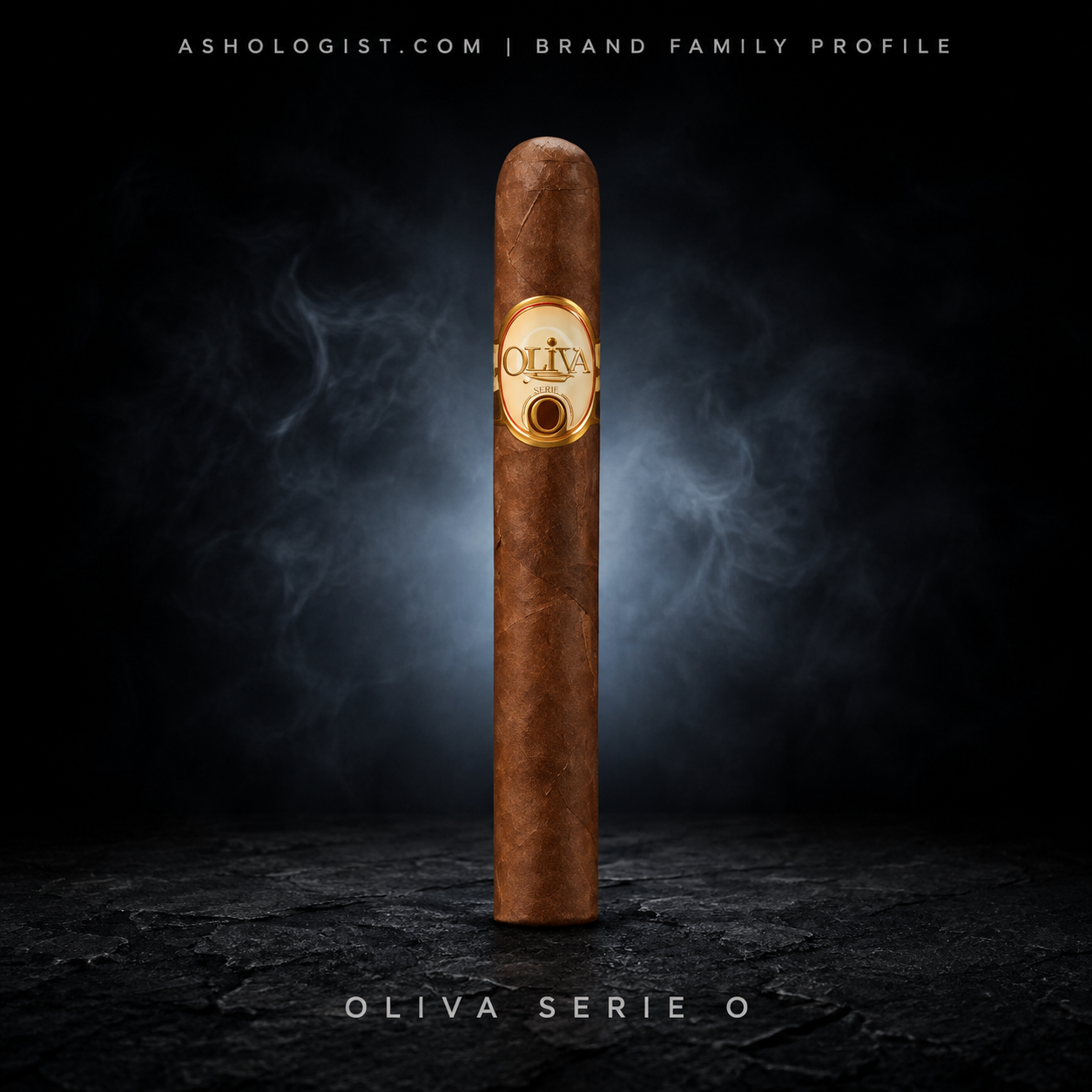
Serie O
Serie O turns agricultural geography into a simple portfolio idea. Oliva grows the same seed in Esteli, Condega and the Jalapa Valley, then combines those regional components. The line therefore provides the strongest concise explanation of how Nicaraguan terroir and Cuban growing tradition meet in the portfolio.
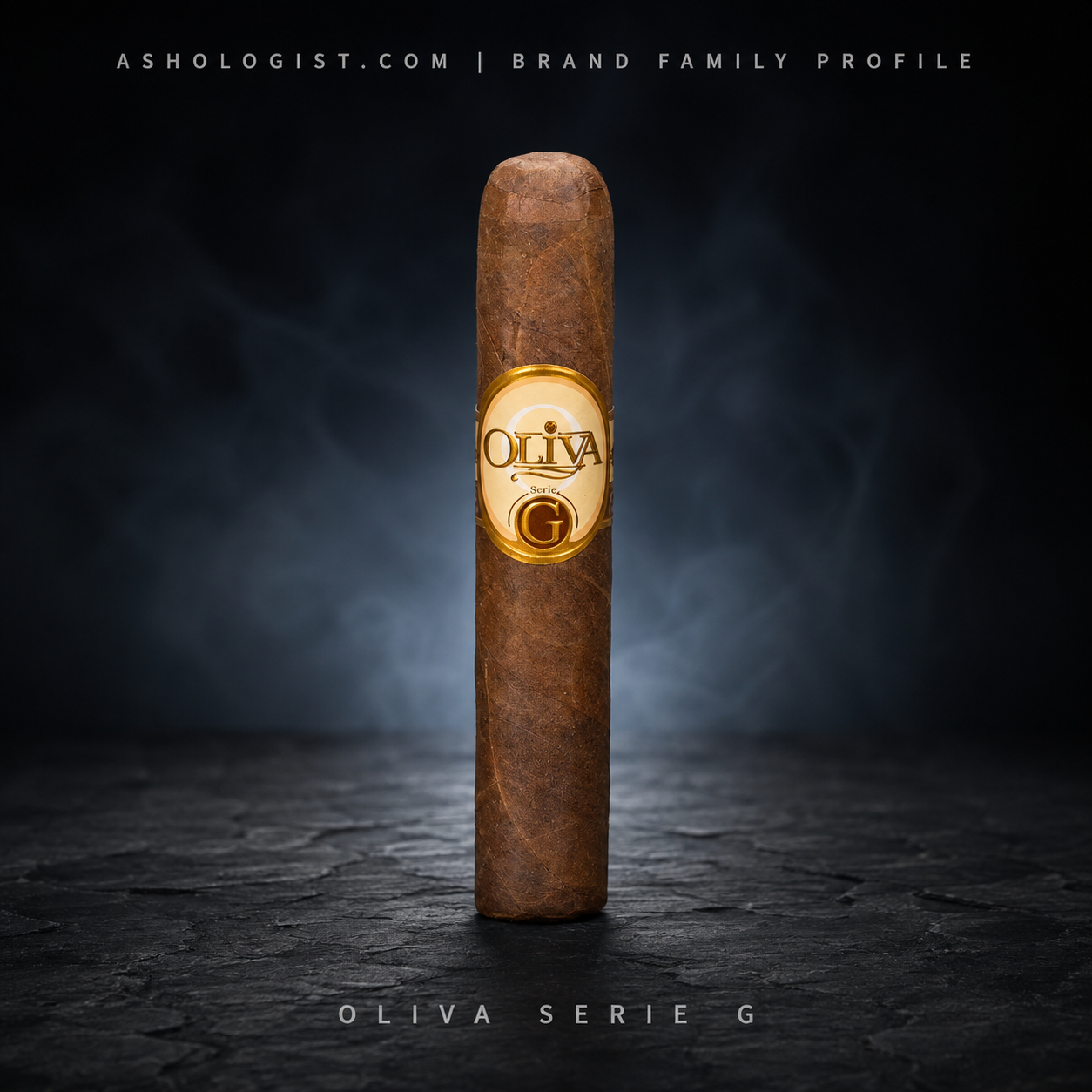
Serie G
Serie G separates itself through an African Cameroon wrapper paired with Nicaraguan tobacco. It gives the company page a useful contrast with the region-driven Serie O and the ligero-centered Serie V families, showing that Oliva's portfolio is organized by distinct blending positions rather than by packaging alone.
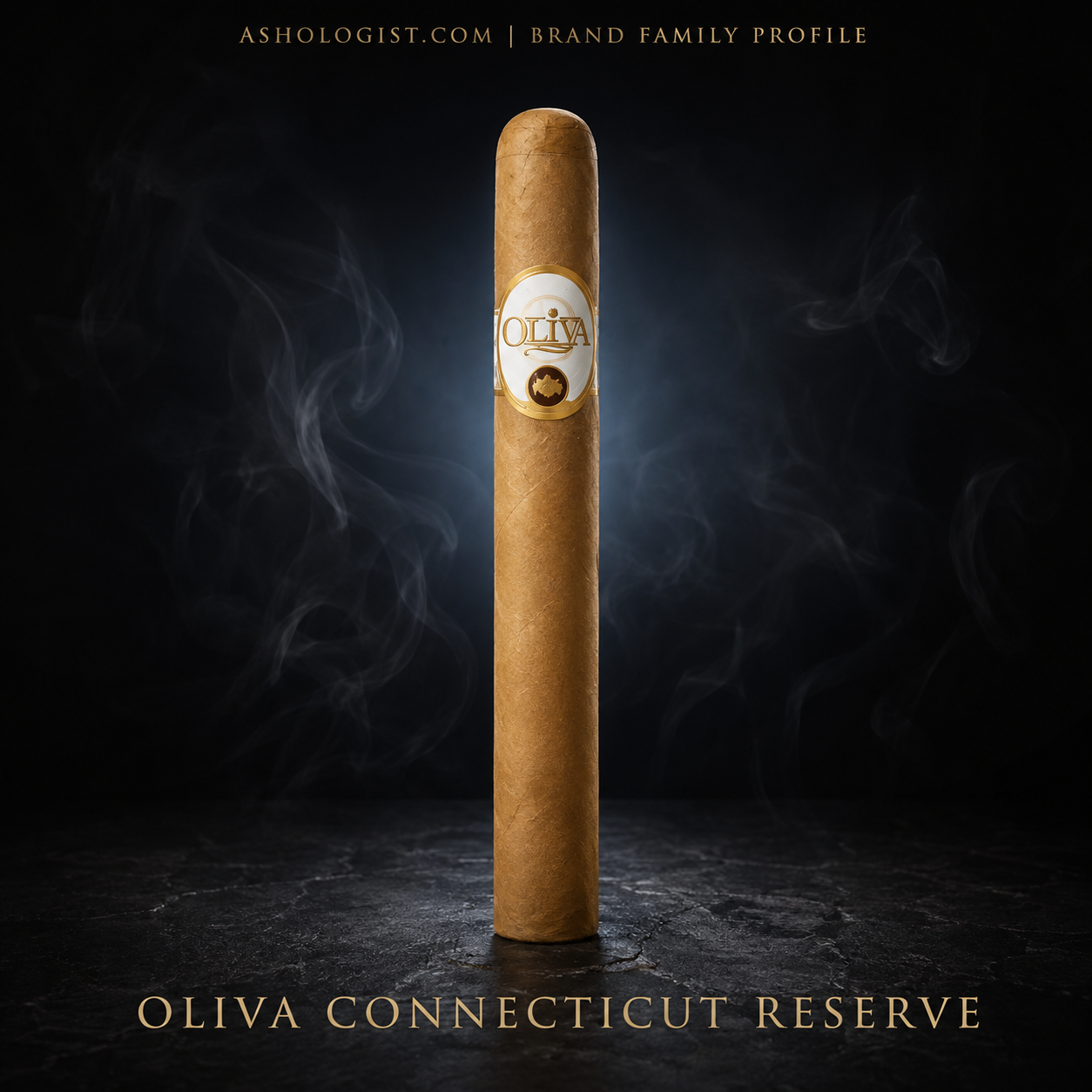
Connecticut Reserve
Connecticut Reserve broadens the range through an Ecuadorian Connecticut wrapper over Nicaraguan binder and filler. Its role is to provide an accessible entry point into the Oliva system while maintaining the Nicaraguan core that ties the portfolio together.
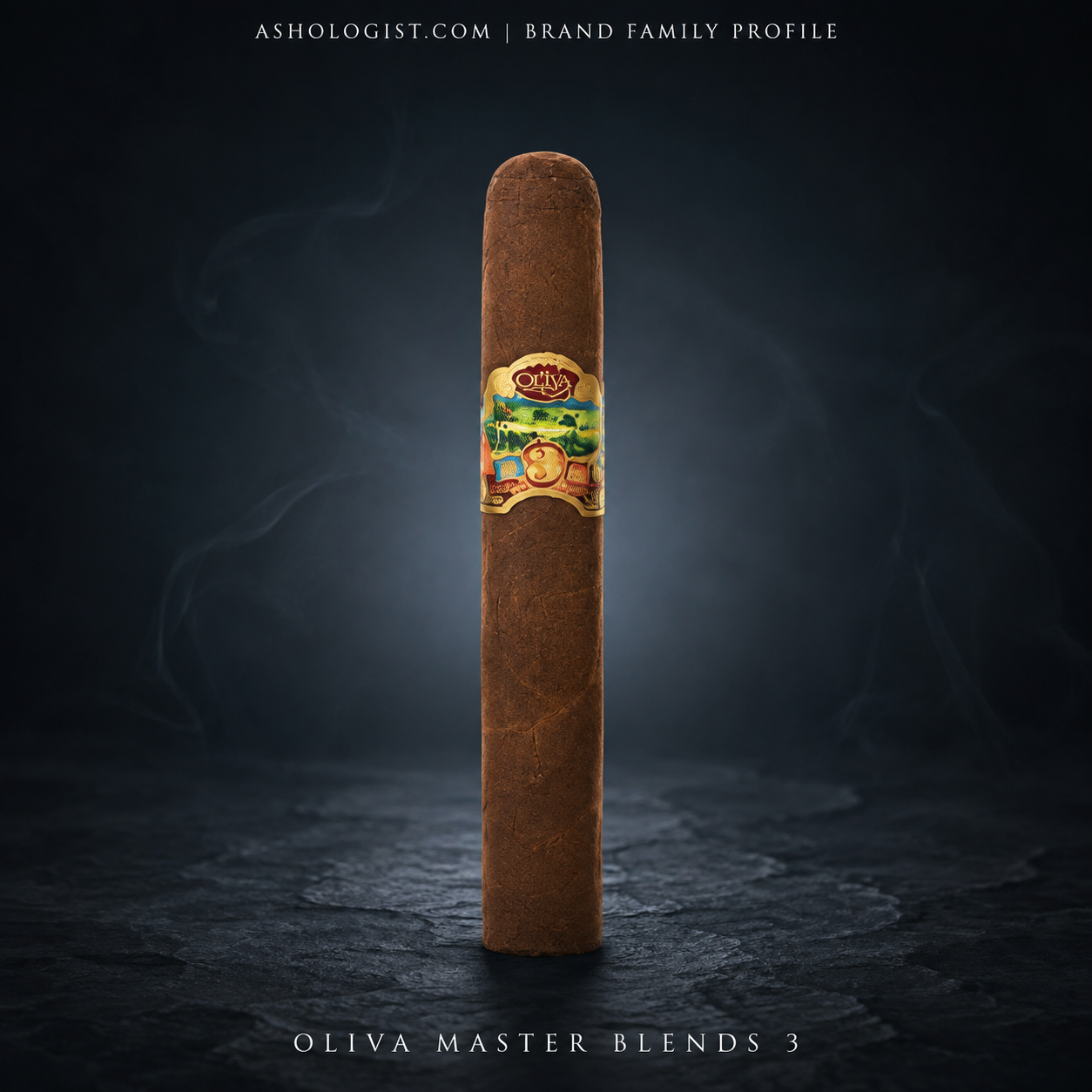
Master Blends 3
Master Blends 3 represents the more limited and artisanal side of the company. Oliva identifies it as the third Master Blends offering and centers the concept on Nicaraguan ligero and Broadleaf sun-grown wrapper. It is important as a portfolio marker, not as a prompt to catalog every historical Master Blends release.
Oliva in the Ashology Network
On Ashologist.com, the Oliva manufacturer profile should be the central company hub. Individual evaluations of Serie V Melanio, Serie V, Serie O and other Oliva cigars can link back here for family, ownership and factory context. This page can then link outward to cigar-specific tasting, construction, ranking and tournament evidence.
The manufacturer profile should not assign or repeat a public score. Its job is to explain the company and make the portfolio navigable. Ashology evaluations and Cigar of the Year matchups remain the correct homes for cigar-specific judgment, preserving a clean separation between company reference material and independent product assessment.
Frequently Asked Questions
When did the Oliva family begin growing tobacco?
Oliva traces its documented tobacco heritage to 1886, when Melanio Oliva began growing tobacco in Pinar del Rio, Cuba. That date describes the family tradition; the modern Oliva Cigar Company developed later in Nicaragua and the United States.
Who owns Oliva Cigars?
Oliva Cigars is part of the family-owned Vandermarliere Cigar Family. The Belgian family company J. Cortes purchased Oliva in 2016, and Frederik Vandermarliere leads the group.
Where are Oliva cigars made?
Oliva's handmade premium-cigar production is centered in Esteli, Nicaragua. The company also draws on tobacco activity across recognized Nicaraguan growing regions such as Esteli, Condega and Jalapa.
Is Oliva a Cuban cigar company?
No. Oliva's family roots begin in Cuba, but the current company's cigars are made in Nicaragua. The profile should describe the brand as Nicaraguan-made with Cuban family and tobacco heritage.
What is Oliva's flagship cigar line?
Serie V Melanio is the clearest prestige flagship. Serie V is the broader foundation of that part of the portfolio and remains one of the company's most important families.
What is the difference between Serie V and Serie V Melanio?
They are related but distinct families. Serie V establishes the core Nicaraguan ligero-centered identity, while Serie V Melanio is a separately developed prestige line named for Melanio Oliva. Exact cigar and vitola comparisons belong on individual product pages.
Which Oliva lines should a new reader know?
Start with Serie V Melanio, Serie V, Serie O and Serie G. Connecticut Reserve and Master Blends 3 show additional portfolio range, while Gilberto Oliva and Flor de Oliva complete the broader company map.
Are Nub and Cain part of Oliva?
Nub and Cain are associated with the Oliva manufacturing organization and wider handmade-cigar portfolio. For a clean site structure, Ashologist should treat them as related brands or future standalone profiles instead of mixing every expression into the core Oliva page.
Ashologist’s Company Perspective
Oliva is best understood as a migration story expressed through a disciplined portfolio. Melanio and Facundo establish the Cuban agricultural roots. Gilberto's search leads the family to Nicaragua. Serie O explains regional tobacco; Serie V explains the modern house identity; Serie V Melanio turns the founding family name into the prestige flagship. Current Vandermarliere ownership adds scale and factory investment without erasing that sequence.
For Ashologist.com, the strongest Oliva page should make those relationships obvious and stop before it becomes a store shelf in document form. That approach creates a readable company story for visitors, a useful entity page for search engines and a durable linking hub for reviews, rankings and Cigar of the Year coverage.
Continue Reading
Editorial and Verification Note
This is an independent informational profile prepared for Ashologist.com. It is not sponsored by Oliva Cigars or the Vandermarliere Cigar Family. Company history, ownership, manufacturing and portfolio information were checked against official Oliva materials available as of August 19, 2026. Facilities, product availability and portfolio plans may change. Portfolio descriptions are intentionally concise; product-specific tasting, construction and competition scoring belong on individual Ashology and Cigar of the Year pages.
Primary Sources
- Oliva Cigars - Official Home and Current Range: https://olivacigar.com/
- Oliva Cigars - Heritage: https://olivacigar.com/heritage/
- Oliva Cigars - Official Portfolio: https://olivacigar.com/cigars/
- Oliva Cigars - Serie V Melanio: https://olivacigar.com/cigars/serie-v-melanio/
- Oliva Cigars - Serie V: https://olivacigar.com/cigars/serie-v/
- Oliva Cigars - Serie O: https://olivacigar.com/cigars/serie-o/
- Oliva Cigars - Serie G: https://olivacigar.com/cigars/serie-g/
- Oliva Cigars - Connecticut Reserve: https://olivacigar.com/cigars/connecticut-reserve/
- Oliva Cigars - Master Blends 3: https://olivacigar.com/cigars/master-blends-3/
- Oliva Cigars - Flor de Oliva: https://olivacigar.com/cigars/flor-de-oliva/
- Oliva Cigars - Vandermarliere Ownership and Esteli Investment: https://olivacigar.com/oliva-collaborates-with-elie-bleu-to-create-new-limited-edition-collectors-humidor/