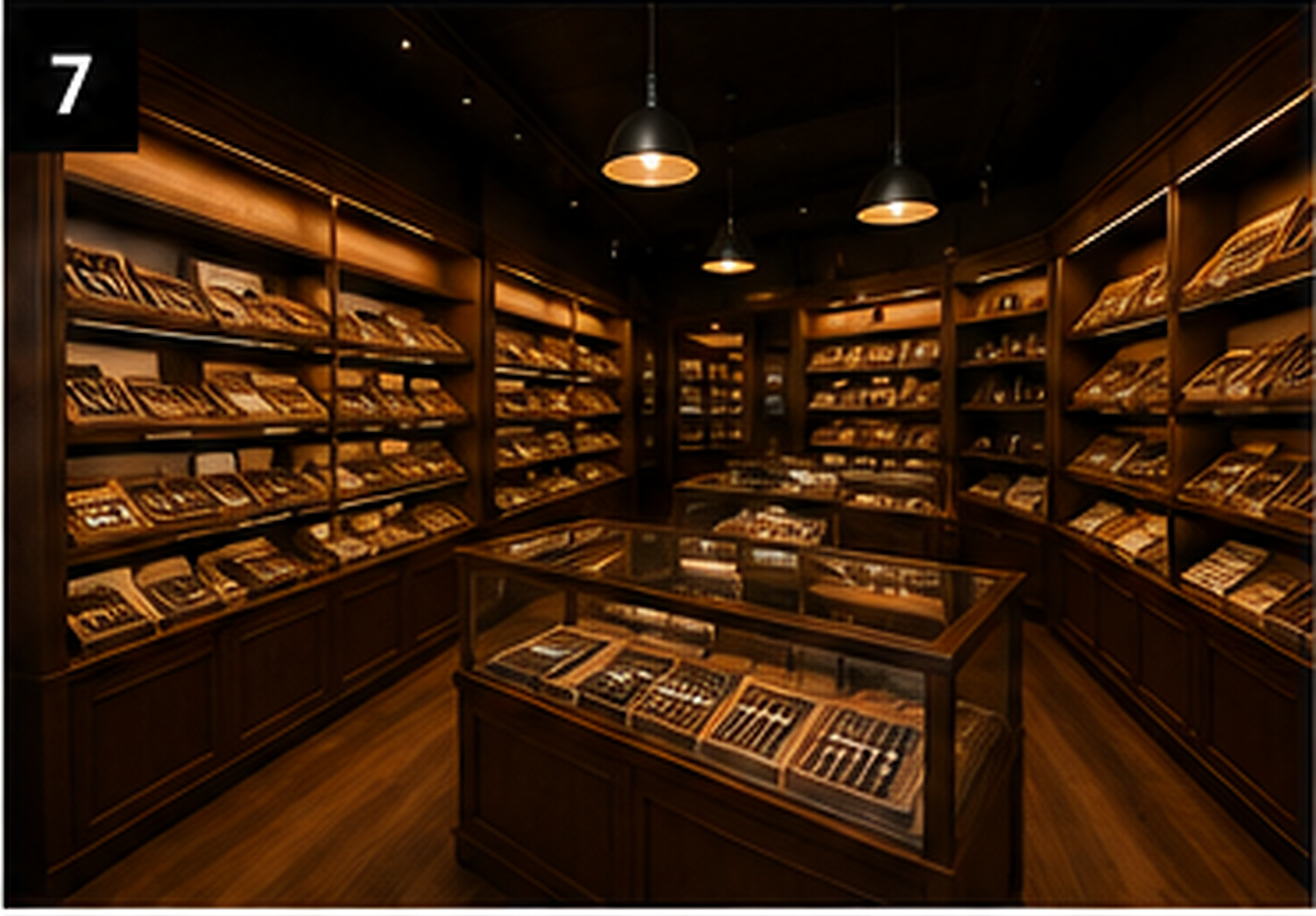
Walk into a well-stocked cigar store and the selection can appear almost limitless. Every wall is covered with boxes representing different manufacturers, blends, wrappers, sizes and limited editions.
Behind that display are thousands of individual SKUs. Every different cigar size, wrapper or package configuration may be treated as a separate SKU.
But assortment and demand are not the same thing.
Based on years of observing cigar retail and wholesale activity, the number of cigars that consistently drive meaningful repeat business can be remarkably small. In many stores, approximately 25 to 30 dependable SKUs appear to generate a disproportionate amount of the actual sales activity.
The exact number differs by store, location, customer base and price point. The larger point remains the same: a humidor may contain hundreds of choices, while its business is largely supported by a much smaller group of proven sellers.
How the Cigar Catalog Became So Large
Manufacturers have several reasons to continually expand their portfolios. An established blend may be offered in six or eight different sizes. A second wrapper can effectively double the line. Then come anniversary releases, seasonal products, retailer exclusives, regional editions and short-production blends.
Each release gives retailers and sales representatives something new to discuss. New cigars generate attention, photographs, reviews and initial trial purchases.
There is nothing inherently wrong with that. The cigar industry needs experimentation, and every future bestseller begins as an unproven product. The problem begins when the industry treats every new release as though it has already earned permanent space in the humidor. It has not.
Shipping a Cigar Is Not the Same as Selling It
There are several different events that can all be described as a sale. A manufacturer sells a box to a distributor. The distributor sells it to a retailer. The retailer sells one cigar to a curious customer.
Only one measurement reveals whether the product has developed genuine demand: does the customer return and purchase it again?
The first purchase can be created by packaging, advertising, a recommendation, a discount or simple curiosity. The second and third purchases are much more meaningful. They indicate that the smoking experience justified the price. That is the difference between trial and demand.
A cigar that receives attention but produces few repeat purchases may remain visible in the marketplace without becoming a meaningful seller. It occupies shelf space, ties up inventory dollars and makes the manufacturer's portfolio appear broader, but it may contribute very little sales velocity. That is what we mean by window dressing.
The core sellers pay the bills. The rest of the assortment must have a clear purpose.
Window Dressing Is Not Necessarily Bad
Calling a product window dressing does not mean it is a bad cigar. Some slower-selling cigars provide variety for experienced customers. Others appeal to a narrow but loyal audience. Limited editions can create excitement and give retailers opportunities to hold events or engage collectors.
Selection itself has value. A store containing only its 25 bestselling cigars would probably feel incomplete. But retailers should distinguish between products that create atmosphere and products that support the business.
The core sellers pay the bills. The rest of the assortment must justify itself through discovery, customer loyalty, strategic differentiation or an acceptable financial return. When those distinctions are ignored, a humidor can become crowded with products that look impressive but rarely move.
The Shelf Tells the Truth
Cigar ratings often concentrate within a very narrow range. Products routinely receive scores in the 90s, making nearly every reviewed cigar sound exceptional.
A numerical score can describe someone's opinion of a smoking experience. It does not necessarily predict whether customers will spend their own money on that cigar repeatedly. Retail performance provides a harder measurement.
The questions that matter include:
- How quickly does the cigar sell through?
- How often is it reordered?
- How many customers purchase it more than once?
- Does it sell without a discount?
- Does it perform in multiple stores or only one location?
- Would customers buy it again at its regular price?
These measurements reveal more about commercial demand than the excitement surrounding a product's launch. A cigar cannot live forever on its introductory order. Eventually, it must earn the reorder.
Too Much Choice Can Work Against the Customer
A massive selection sounds beneficial, but excessive choice can make the buying process more difficult. Many customers enter a cigar store looking for dependable guidance. When confronted with hundreds of nearly indistinguishable options, they often return to familiar brands or ask the retailer to make the decision for them.
That places greater importance on the retailer's knowledge and recommendations. It also means that adding more SKUs does not automatically create more sales. A carefully organized assortment can outperform a crowded humidor because it makes strong products easier to understand and discover.
Retailers do not necessarily need fewer cigars. They need clearer reasons for carrying each one.
A More Disciplined Inventory Model
A practical cigar assortment can be viewed in three groups.
The first group consists of proven core products. These cigars demonstrate repeat demand, reliable turnover and consistent customer acceptance.
The second group contains developing products. They are given a fair opportunity to establish themselves through sampling, education, events and measured customer feedback.
The third group contains products that remain on the shelf mainly because they were once new, were included in a purchasing program or have never been formally evaluated for continued placement. The third group is where inventory dollars quietly disappear.
Every cigar does not need to become a national bestseller. However, every permanent SKU should have a clear role within the store.
Consumers Should Help Determine What Survives
The premium cigar industry has traditionally relied heavily on expert reviews, sales representatives and individual retailer opinions. Those voices remain valuable, but they should not be the only sources of information.
Organized consumer testing can provide a different kind of evidence. Head-to-head comparisons, structured feedback, repeat-purchase questions and point-of-sale results can reveal which cigars genuinely connect with customers. When those measurements are collected across multiple stores, the industry begins to see demand rather than promotion.
That is one of the principles behind Ashology: a cigar's story should include more than a score. It should include how people experience it, whether they prefer it against direct competition and whether they would purchase it again.
Consumer tournaments and cigar bracket challenges can add another dimension. Instead of asking one reviewer to assign a number, individual consumers compare cigars and choose which one advances. The result is not simply another opinion. It is a measurable pattern of preference.
Related analysis on ValueCigarOfTheYear.com: Does a $25 Cigar Really Sell? Finding the Price Sweet Spot.
The Industry Does Not Need More Noise
Thousands of premium cigar SKUs may exist, but only a fraction will develop lasting consumer demand. The industry should continue experimenting. Retailers should continue discovering new products, and customers should always have opportunities to explore.
However, newness should not be confused with success.
A cigar earns its position through repeat purchases, inventory movement and sustained consumer preference - not simply because it received a high score, appeared in a catalog or arrived with an attractive sales presentation.
The humidor may need window dressing. But the business is built on the 25 or 30 cigars customers return to buy again.